
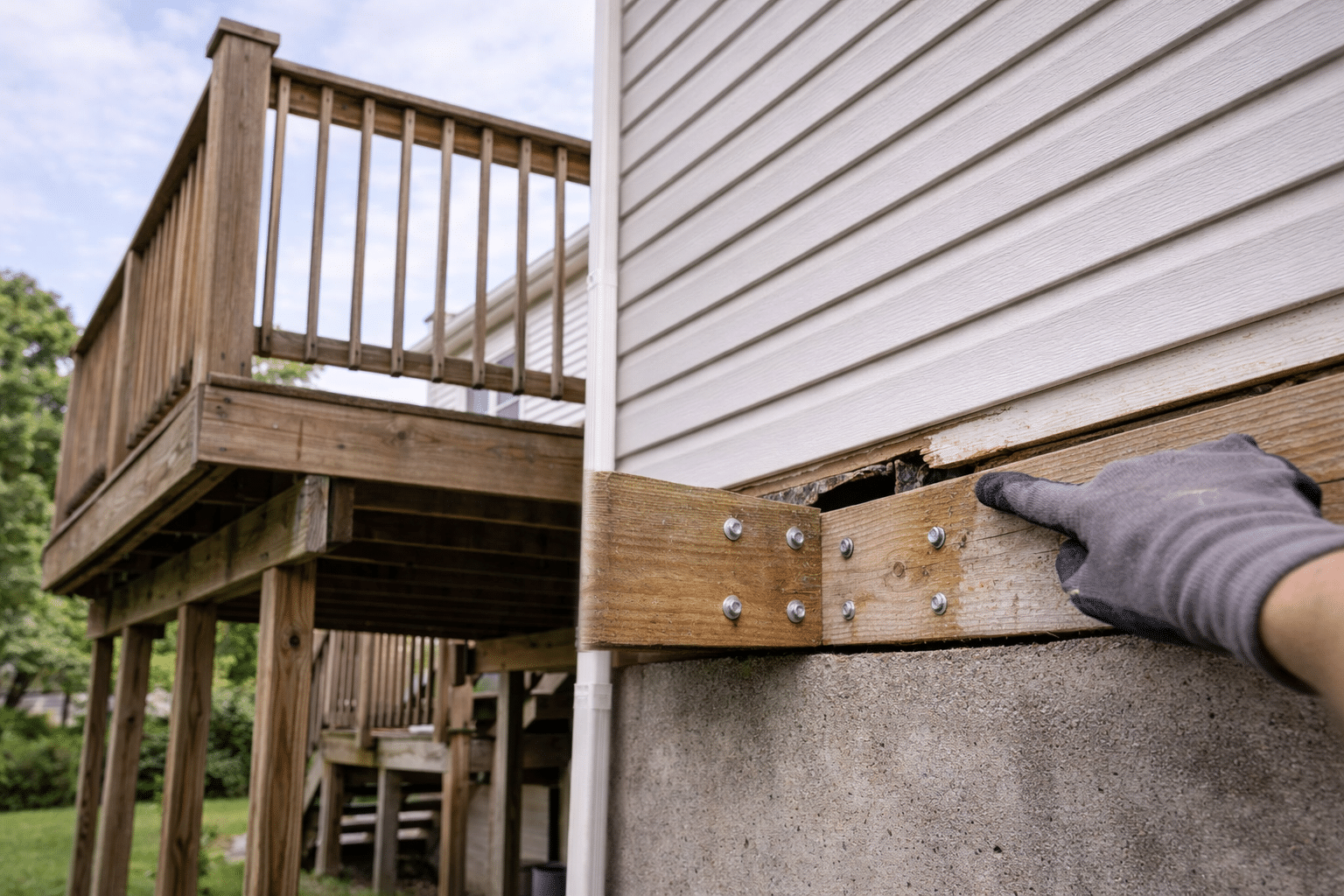
As temperatures rise and outdoor spaces become more active across Maryland, decks begin to see increased use. For homebuyers and homeowners in the greater Baltimore area, early spring is an ideal time to evaluate deck safety, particularly the structural components that support the system.
One of the most critical elements of a deck is the ledger board connection. This component attaches the deck to the home and plays a major role in overall stability. During a home inspection, careful attention is given to how the ledger is installed and how it interacts with the structure.
Understanding how inspectors evaluate deck safety helps provide clarity when reviewing inspection findings.
Why the Ledger Board Matters
The ledger board is the horizontal framing member that connects the deck to the home. It supports a significant portion of the deck’s load and transfers weight into the structure.
A properly installed ledger board should be:
• Securely fastened to the structure
• Properly flashed to prevent moisture intrusion
• Installed against structurally sound framing
Because of its role, any issues at the ledger connection can affect the overall safety of the deck.
Common Attachment Concerns
During inspections, several conditions related to ledger attachment may be observed. These are often related to installation methods or long term exposure to weather.
Common concerns include:
• Improper fasteners or spacing
• Missing or inadequate lag bolts or structural screws
• Ledger boards attached to non structural materials
• Visible gaps between the ledger and the home
These conditions do not always indicate immediate failure, but they may warrant further evaluation or correction.
Flashing and Moisture Protection
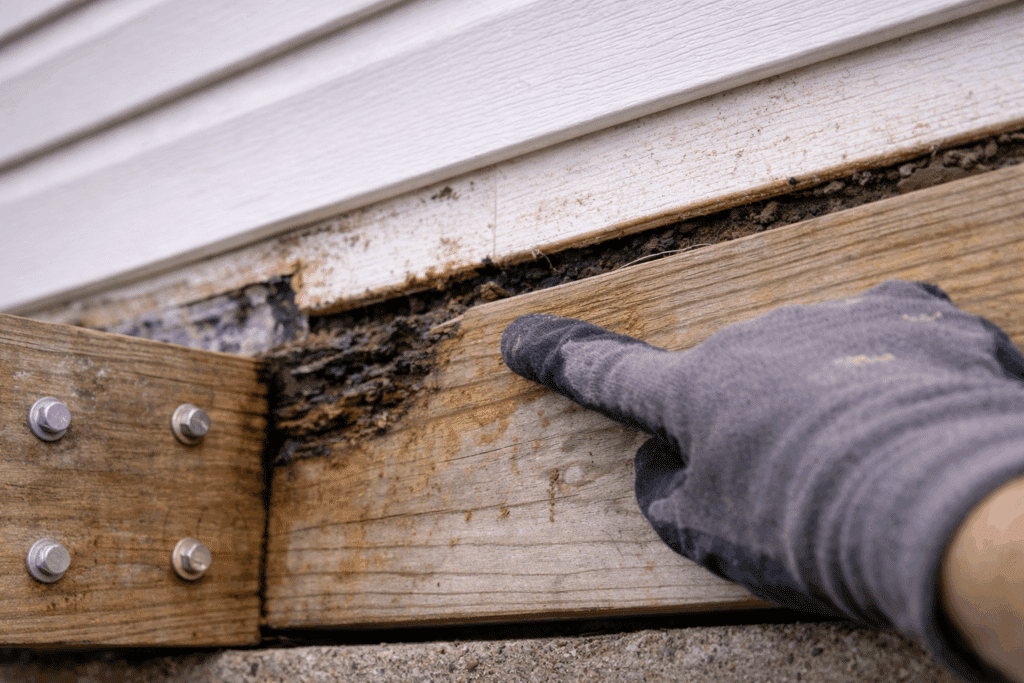
Flashing is installed above the ledger board to direct water away from the connection point. Without proper flashing, water can enter the area behind the ledger and affect the structural components of the home.
Inspectors often look for:
• Presence of flashing above the ledger
• Signs of water staining or deterioration
• Areas where flashing may be missing or improperly installed
Maintaining proper moisture protection is essential for long term deck performance.
Signs of Moisture Related Deterioration
Over time, moisture exposure can affect both the ledger board and the structure it is attached to. During inspections, we evaluate visible indicators of deterioration.
These may include:
• Wood discoloration or softening
• Fastener corrosion
• Separation between materials
• Evidence of past repairs
Not all deterioration is extensive, but identifying these signs early helps determine whether further evaluation is needed.
Guardrails and Structural Stability
While the ledger board is a primary focus, inspectors also evaluate the overall stability of the deck system.
This includes:
• Guardrail attachment and rigidity
• Post and beam connections
• General framing condition
Deck safety is based on how all components work together, not just one connection point.
Decks in Maryland Climate Conditions
Maryland’s seasonal changes expose decks to moisture, humidity, and temperature variation throughout the year. These conditions can affect wood components, fasteners, and connection points over time.
Because decks are exterior structures, routine maintenance and periodic evaluation are important to support long term performance.
Why Deck Inspections Matter for Buyers
For homebuyers, a deck inspection provides valuable insight into how the structure is performing at the time of inspection. It helps identify whether the deck appears properly attached and whether any maintenance or further evaluation may be recommended.
The goal is not to create concern, but to provide a clear understanding of the deck’s condition and how it may perform with regular use.
Supporting Safe Outdoor Use
As outdoor activity increases in spring and summer, ensuring deck safety becomes more important. Addressing minor concerns, maintaining proper flashing, and ensuring secure attachment all contribute to safe use.
A home inspection helps identify visible conditions and provides guidance on maintaining deck systems over time. With proper attention and care, decks can continue to function safely and reliably as part of the home.
Check out our reviews!