
In many homes across the greater Baltimore area, windows and doors are common sources of air leakage and moisture intrusion. As homes age, seals and materials around these openings can begin to wear, affecting overall comfort and efficiency.
During a home inspection, windows and doors are evaluated for visible conditions that may impact performance. Understanding how sealing issues develop helps homeowners and buyers better interpret inspection findings.
Why Sealing Matters
Windows and doors are openings in the building envelope. Proper sealing helps control:
• Air movement
• Moisture intrusion
• Energy efficiency
According to the U.S. Department of Energy, air leaks around windows and doors can significantly impact a home’s energy efficiency and indoor comfort. Sealing these gaps is one of the most effective ways to reduce energy loss and maintain consistent indoor conditions.
Common Signs of Air Leakage
Air leakage is one of the most noticeable issues in older homes.
Inspectors look for:
• Drafts near windows and doors
• Gaps around frames or trim
• Movement in lightweight materials like curtains
• Inconsistent temperatures near openings
These conditions may reduce comfort and efficiency over time.
Deteriorated Caulking and Sealants
Caulking and sealants are used to close small gaps around windows and doors. Over time, these materials can dry out, crack, or separate from surfaces.
Common observations include:
• Cracked or missing caulking
• Shrinking or pulling away from edges
• Areas where previous sealing has worn down
Maintaining these seals helps limit air and moisture entry.
Window Frame and Sill Conditions
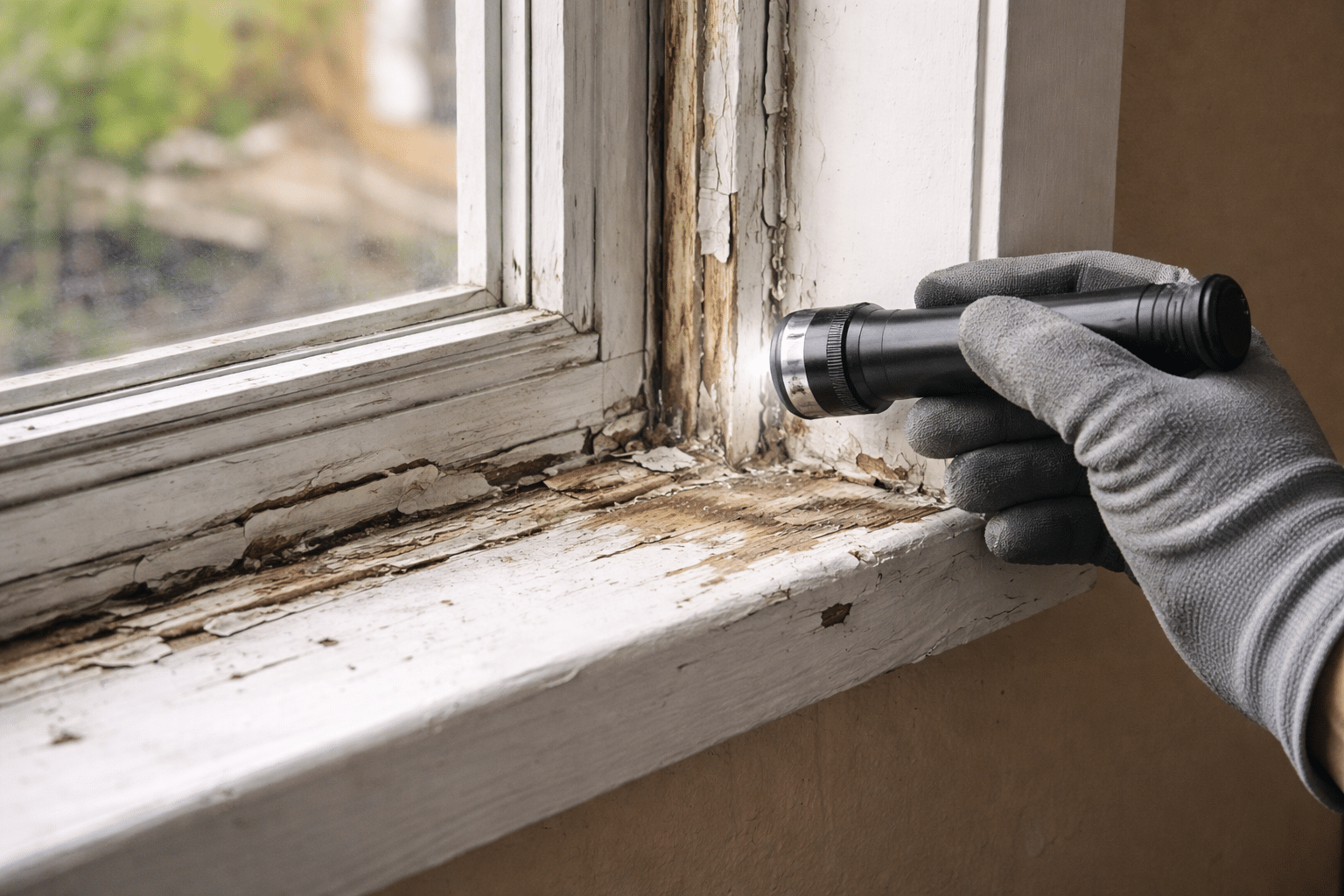
Older window frames and sills may show signs of wear due to long term exposure to moisture and temperature changes.
Inspectors may observe:
• Minor wood deterioration
• Soft or discolored areas
• Paint failure or peeling
These conditions can indicate prolonged exposure to moisture and may require maintenance.
Door Seals and Weatherstripping
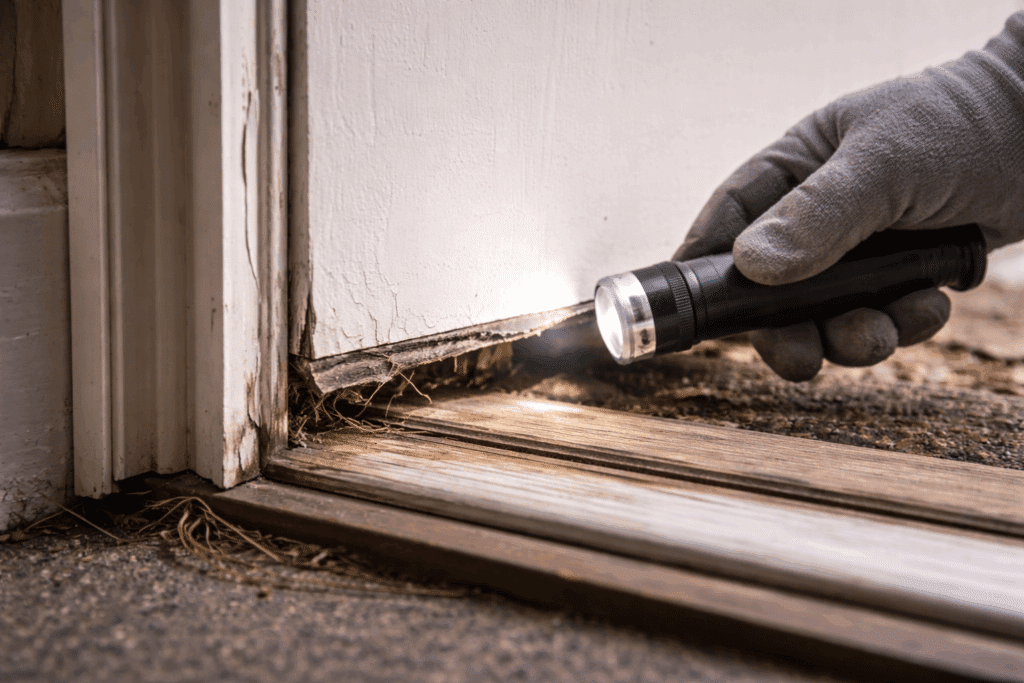
Doors rely on weatherstripping to create a tight seal when closed. Over time, these materials can compress, tear, or become misaligned.
Inspectors look for:
• Gaps along door edges
• Worn or missing weatherstripping
• Light visible around door frames
Replacing worn weatherstripping can improve sealing performance.
Moisture Around Openings
Improper sealing can allow moisture to enter around windows and doors.
Common indicators include:
• Staining on interior surfaces
• Minor water intrusion signs
• Condensation buildup near windows
Managing moisture helps protect surrounding materials from deterioration.
Older Windows and Efficiency
Many older homes still have original windows, which may not perform as efficiently as newer designs.
This may result in:
• Increased air leakage
• Reduced insulation performance
• Higher energy usage
Understanding these limitations helps set realistic expectations.
When Maintenance Is Recommended
A home inspection identifies visible conditions at the time of inspection. Sealing issues are often maintenance related and can be addressed over time.
Common recommendations include:
• Reapplying caulking
• Replacing weatherstripping
• Monitoring areas with minor wear
These steps help maintain the performance of windows and doors.
Supporting Long Term Performance
Windows and doors play an important role in maintaining interior comfort. Addressing minor sealing issues early can help prevent larger concerns over time.
In Maryland’s climate, where seasonal changes are consistent, maintaining proper sealing supports long term home performance and efficiency.