
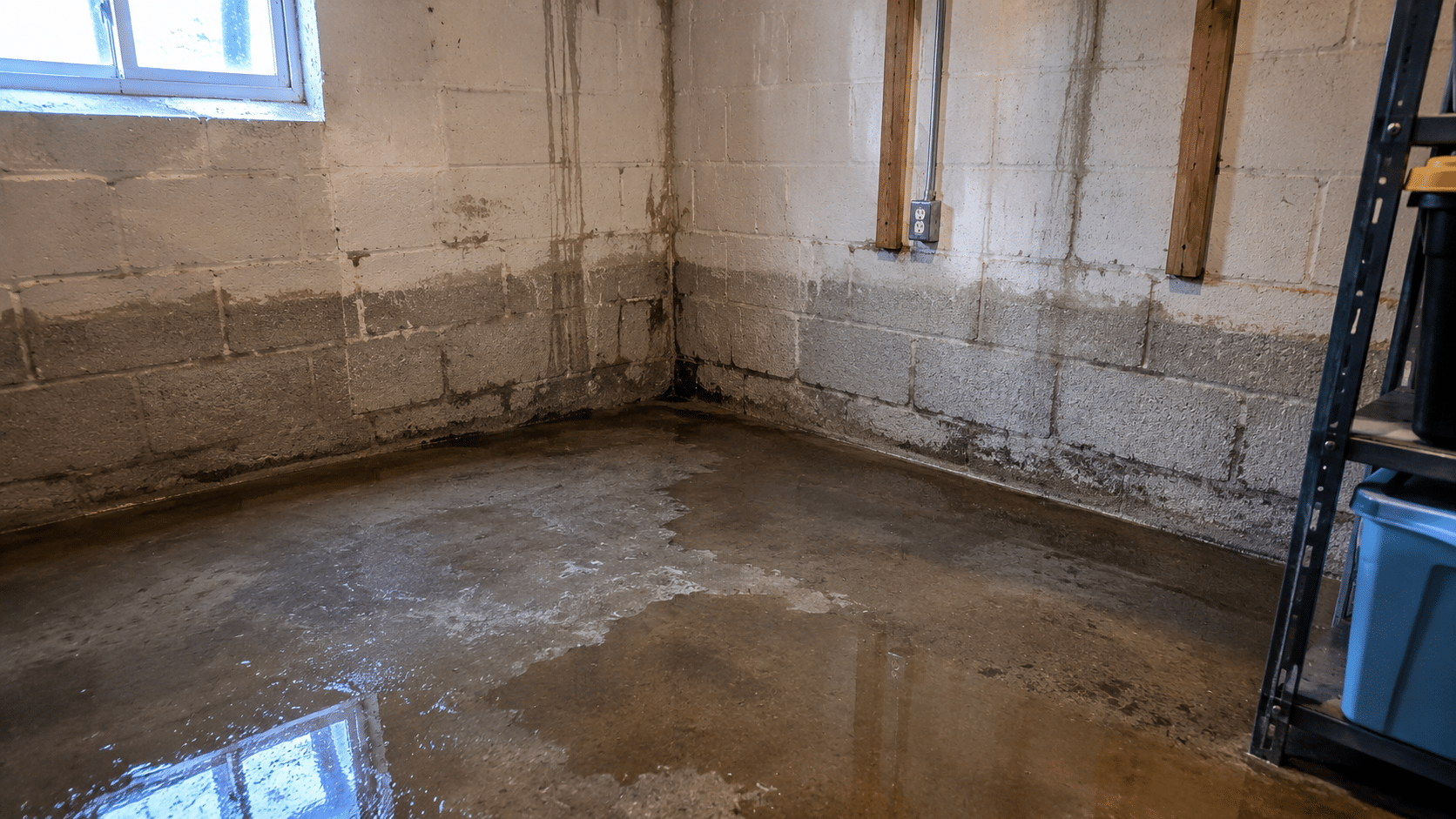
Heavy rain is common in the greater Baltimore area during spring and early summer. When large amounts of water collect around a home, basements are often the first place where signs of moisture may appear.
During a home inspection, basements are evaluated for visible conditions that may indicate water intrusion or moisture concerns. Understanding how and why water enters these areas helps homeowners and buyers better interpret inspection findings.
Why Basements Are Vulnerable
Basements are below grade, meaning they sit below the surrounding soil level. When the ground becomes saturated after heavy rain, water can move toward the foundation.
Proper drainage helps:
• Direct water away from the home
• Reduce pressure against foundation walls
• Limit moisture entering interior spaces
According to the International Association of Certified Home Inspectors, moisture intrusion in basements is commonly linked to drainage and foundation conditions around the home.
Common Entry Points for Water
Water intrusion can occur through several areas around the foundation.
Inspectors often look for:
• Cracks in foundation walls or floors
• Gaps around utility penetrations
• Window wells without proper drainage
• Seams where walls and floors meet
These areas may allow water to enter when pressure builds outside the foundation.
Signs of Basement Water Intrusion
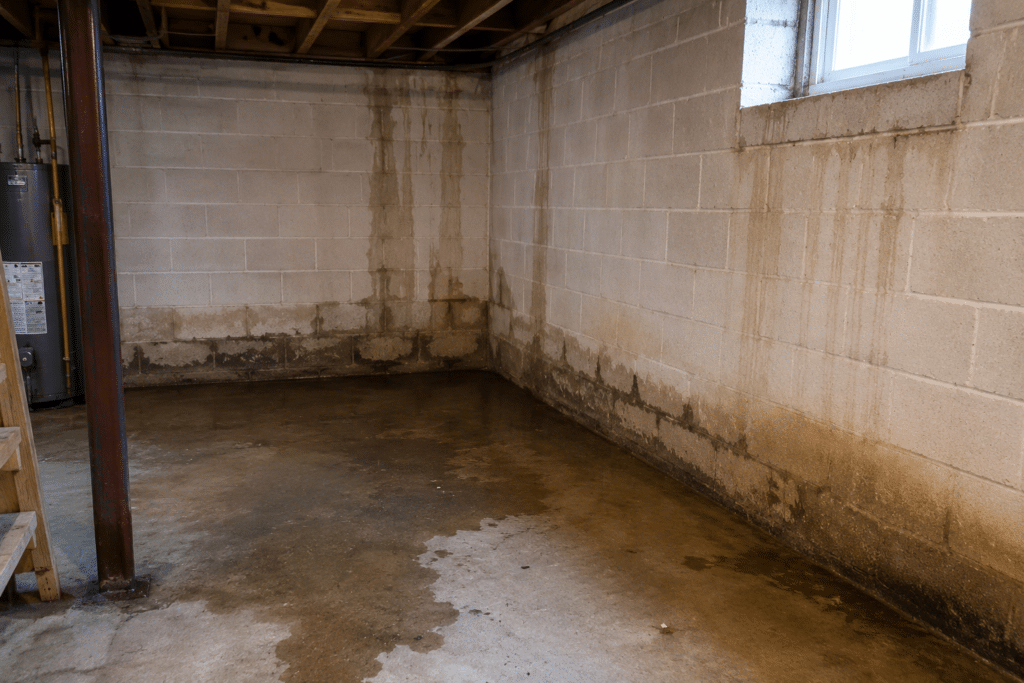
Not all water intrusion is active at the time of inspection. Many indicators are based on past conditions.
Common signs include:
• Staining on walls or floors
• Efflorescence on concrete surfaces
• Damp or musty odors
• Warped or deteriorated materials
These observations help identify moisture related patterns.
The Role of Exterior Drainage
Conditions outside the home often influence what happens inside the basement.
Inspectors evaluate:
• Grading around the foundation
• Downspout discharge locations
• Areas where water may collect
• Landscaping that may direct water toward the home
Proper exterior drainage helps reduce the likelihood of intrusion.
Sump Pumps and Interior Systems
Some homes use sump pumps to manage water that enters the basement.
Inspectors may observe:
• Presence of a sump system
• General condition of the pump
• Discharge location outside the home
These systems help manage water but do not replace proper exterior drainage.
After Heavy Rain Events
Water intrusion is often more noticeable after periods of heavy rainfall.
During these times:
• Soil becomes saturated
• Hydrostatic pressure increases
• Water may move through small openings
Even minor entry points can allow moisture to pass through under these conditions.
When Further Evaluation Is Recommended
A home inspection provides a visual assessment at a specific point in time. If signs of moisture or past intrusion are observed, further evaluation may be recommended.
This does not always indicate a major issue, but it helps provide a clearer understanding of conditions.
As discussed in our article on Gutters and Downspouts That Cause Foundation Problems, managing water at the exterior is one of the most effective ways to reduce basement moisture concerns.
Supporting Long Term Moisture Control
Managing water around the home is key to maintaining basement conditions over time.
Simple steps such as improving drainage, maintaining gutters, and monitoring moisture indicators can help reduce the likelihood of future issues.
Understanding how water interacts with the home allows homeowners to make informed decisions and maintain their property more effectively.