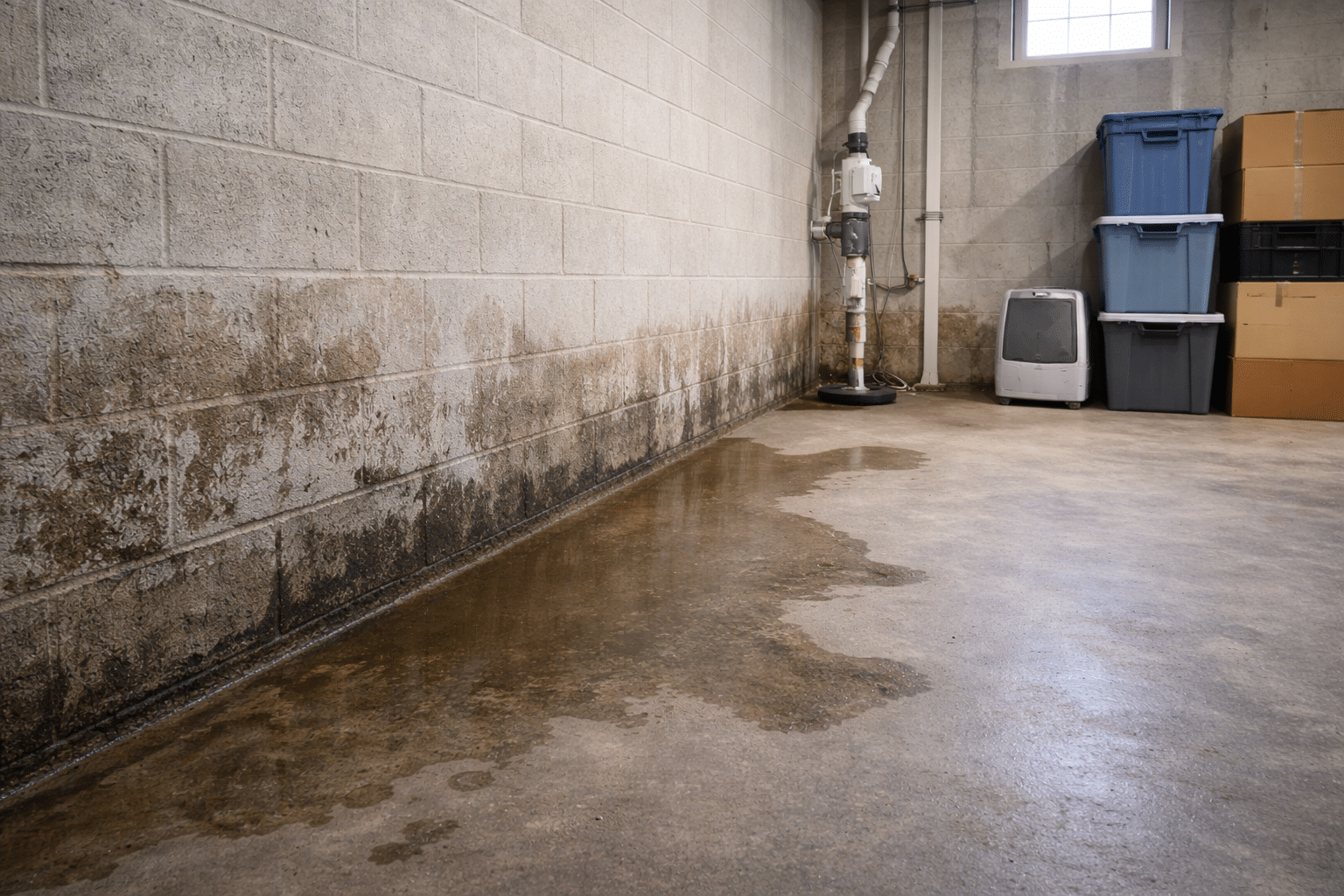
Basement moisture is one of the most common concerns raised during home inspections, especially in Maryland where many homes include basements below grade. Buyers often notice damp smells, staining, or discoloration and worry that these signs indicate serious problems. While moisture in basements is common, not all moisture conditions are cause for alarm.
In this article, we’ll explain why basement moisture occurs, what’s considered normal in Maryland homes, and when moisture findings deserve closer attention during a home inspection.
Why Basements Are Prone to Moisture
Basements are surrounded by soil, which naturally contains moisture. Changes in temperature, rainfall, and groundwater levels all influence how moisture interacts with foundation walls and floors. During colder months, melting snow, freeze-thaw cycles, and limited evaporation can make moisture conditions more noticeable.
Maryland’s climate and soil composition contribute to these seasonal moisture patterns, making basement moisture a frequent inspection topic.
Common Sources of Basement Moisture
Inspectors often observe basement moisture related to a combination of exterior and interior factors. Common contributors include:
- Poor exterior drainage or grading
- Foundation wall permeability
- Cracks in foundation walls or floors
- Condensation from temperature differences
- Plumbing leaks or mechanical equipment
Identifying the source of moisture is key to understanding its significance.
What’s Often Normal in Maryland Basements
Some moisture-related observations are common and expected, particularly in older homes or during certain seasons.
Typically normal conditions may include:
- Minor dampness along foundation walls
- Efflorescence or mineral staining from past moisture
- Occasional moisture during heavy rain or snowmelt
These conditions don’t always indicate an active problem, but they should be monitored and documented.
When Basement Moisture Needs Attention
Other moisture findings suggest conditions that may require further evaluation or corrective action.
Worth closer attention:
- Persistent water intrusion or standing water
- Visible mold growth or strong musty odors
- Soft, deteriorated, or damaged building materials
- Evidence of ongoing foundation movement or cracking
Inspection reports help buyers distinguish between typical basement conditions and issues that may affect long-term performance or indoor air quality.
Finished Basements and Hidden Moisture
Finished basements can sometimes conceal moisture issues. Wall coverings, flooring, and insulation may hide signs of dampness until damage becomes more advanced.
Inspectors look for indirect indicators such as staining, odors, or elevated humidity levels that may suggest concealed moisture behind finished surfaces.
Maryland Housing and Basement Design
Many homes in the greater Baltimore area were built decades ago, using construction methods that differ from modern waterproofing practices. Older foundations may lack perimeter drains, waterproof membranes, or sump systems commonly found in newer homes.
Inspectors familiar with Maryland housing stock take these factors into account when evaluating basement moisture conditions.
25 Years of Inspecting Basement Moisture in Maryland Homes
After 25 years of inspecting homes throughout Maryland, one consistent observation is that basement moisture is common but manageable when properly understood. Experience helps inspectors recognize patterns, identify contributing factors, and explain findings clearly.
Buyers benefit most when moisture conditions are presented with context rather than alarm.
Planning for Basement Moisture Findings
If basement moisture is noted during a home inspection, an experienced inspector can help explain what’s typical for the property and whether further evaluation is recommended. In some cases, improvements to drainage, ventilation, or moisture control systems may help reduce moisture over time.
If you’re purchasing a home in Maryland or the greater Baltimore area, a qualified inspection team can help you understand basement moisture findings and how they apply to your specific home.
Final Thoughts
Basement moisture is a common part of homeownership in Maryland, but not all moisture conditions indicate serious problems. Understanding what’s normal and what needs attention allows buyers to make informed decisions and move forward with confidence.
Check out our reviews!