
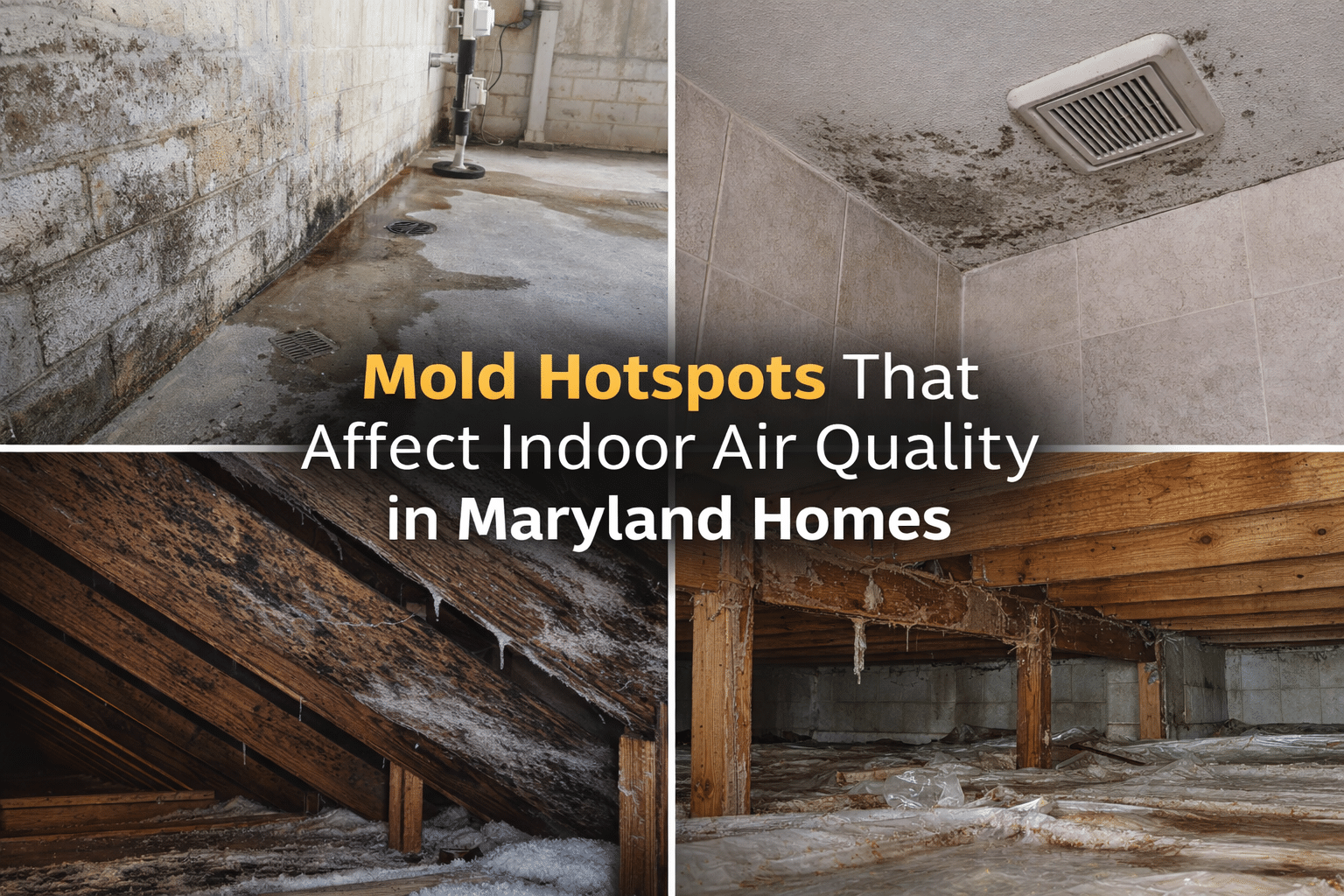
Mold is a topic that often raises concern for homebuyers, especially during the colder months when homes are sealed tightly and ventilation is reduced. Buyers may notice musty odors, staining, or visible growth and wonder how serious the issue might be. While mold is common in many homes, understanding where it typically develops and what it means for indoor air quality is key.
In this article, we’ll explore common mold hotspots found during home inspections in Maryland homes, why these areas are vulnerable, and what buyers should know when mold-related concerns arise.
Why Mold Is More Common in Winter
During winter, homes are closed up to conserve heat. Windows remain shut, fresh-air exchange decreases, and moisture from everyday activities like cooking, bathing, and laundry has fewer opportunities to escape. When moisture accumulates and surfaces remain cool, conditions become favorable for mold growth.
Winter inspections often reveal mold-related issues precisely because moisture and ventilation challenges are more noticeable during this season.
Basements and Lower-Level Spaces
Basements are one of the most common areas where mold-related conditions are observed. Many Maryland homes feature basements that are partially or fully below grade, making them more susceptible to moisture intrusion.
Inspectors often find mold concerns related to:
- Foundation walls that retain moisture
- Areas near sump pits or floor drains
- Finished basement materials that limit airflow
Not every basement moisture condition indicates an active mold problem, but persistent dampness can impact indoor air quality if not addressed.
Bathrooms and Laundry Areas
Bathrooms and laundry rooms are another frequent mold hotspot. These spaces generate high levels of moisture and rely heavily on proper ventilation.
Common contributing factors include:
- Inadequate or unused exhaust fans
- Ventilation fans that terminate improperly
- Moisture trapped behind walls or under flooring
When moisture isn’t removed efficiently, mold growth can occur over time, even if it’s not immediately visible.
Attics and Poorly Ventilated Spaces
Attics are often overlooked, yet they can play a significant role in mold-related concerns. Inadequate attic ventilation can trap warm, moist air, leading to condensation on roof sheathing and framing during cold weather.
Inspectors may observe:
- Dark staining on roof sheathing
- Frost or condensation during winter
- Blocked or insufficient ventilation pathways
Attic mold conditions can affect indoor air quality if spores migrate into living spaces.
Crawlspaces and Enclosed Areas
Crawlspaces with exposed soil, poor drainage, or limited airflow are particularly vulnerable to moisture buildup. During winter, reduced ventilation can allow moisture to linger longer than usual.
Inspectors evaluate crawlspaces for:
- Damp soil or standing water
- Moisture staining on framing
- Condition of vapor barriers and insulation
Proper moisture control in crawlspaces plays a major role in maintaining healthy indoor air conditions.
What’s Normal and What Deserves Attention
Not every mold-related observation indicates a serious indoor air quality issue. Some findings are common in Maryland homes and may be manageable with routine maintenance.
Often observed and manageable:
- Minor surface staining in damp areas
- Past moisture evidence with no active growth
Worth closer attention:
- Visible mold growth spreading across surfaces
- Strong or persistent musty odors
- Moisture conditions that remain unresolved
Inspection findings help buyers determine whether further evaluation or remediation may be appropriate.
Maryland Climate and Housing Factors
Maryland’s climate includes cold winters, humid summers, and frequent seasonal transitions. Many homes in the greater Baltimore area include basements, crawlspaces, and older construction features that influence how moisture behaves indoors.
Inspectors familiar with local housing conditions understand how these factors contribute to mold-related observations and can explain findings in proper context.
25 Years of Inspecting Mold Conditions in Maryland Homes
After 25 years of inspecting homes across Maryland, one consistent lesson is that mold-related concerns are often tied to moisture management rather than isolated defects. Experience helps inspectors identify patterns, explain contributing factors, and guide buyers toward practical next steps.
Clear explanations reduce uncertainty and help buyers focus on solutions rather than fear.
If you’re purchasing a home and mold-related observations come up during the inspection, an experienced inspector can help explain what’s typical for the area and what may require further evaluation. In some cases, addressing ventilation or moisture sources can significantly improve indoor air quality.
If you’d like to schedule a home inspection in Maryland or the greater Baltimore area, a qualified inspection team can help you understand mold-related findings and how they may affect the home.
Final Thoughts
Mold hotspots are common in many Maryland homes, particularly during winter months. Understanding where mold tends to develop and why it occurs allows buyers to interpret inspection findings more clearly and make informed decisions with confidence.
Check out our reviews!