
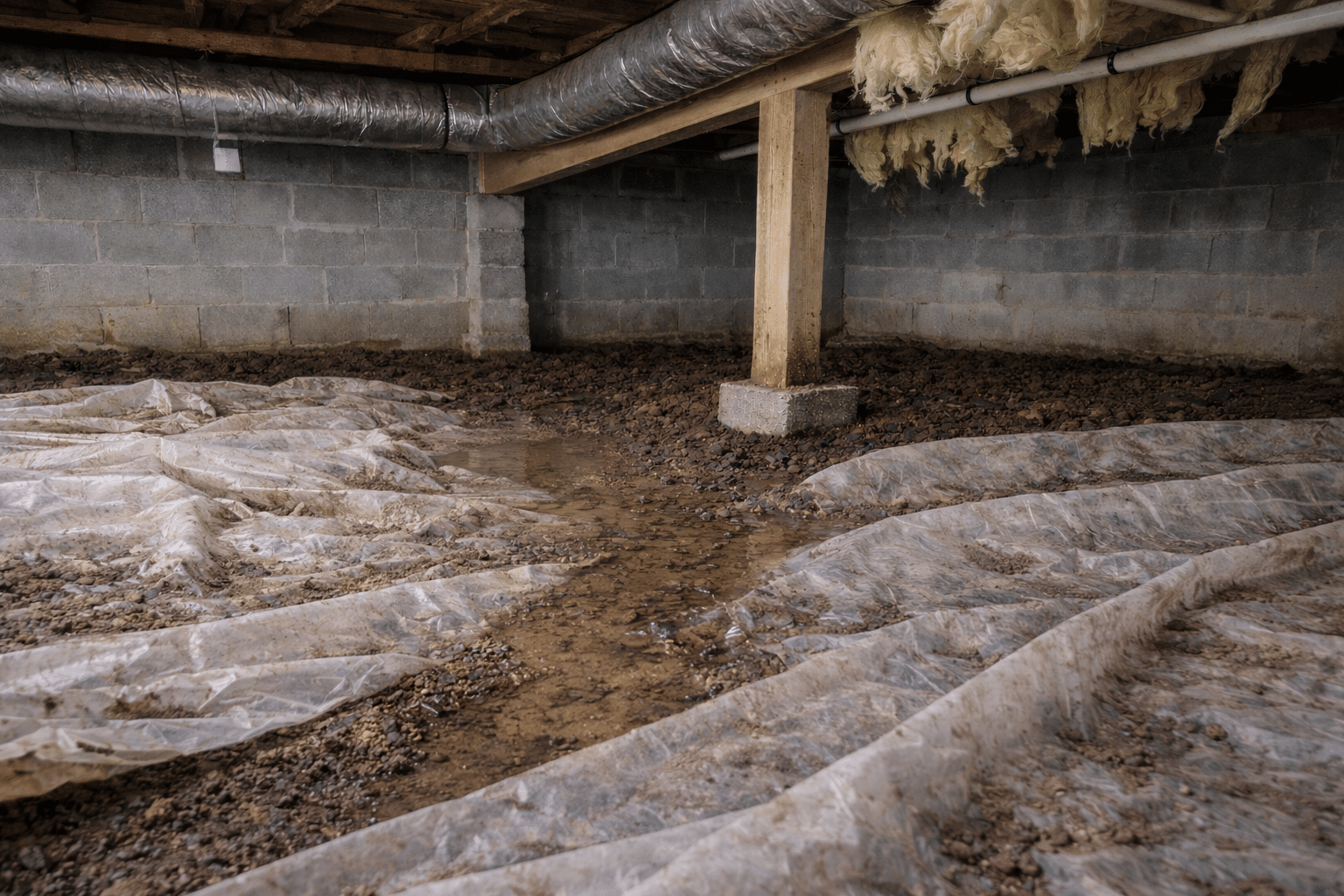
Crawlspaces are often out of sight and rarely visited, yet they play a significant role in a home’s overall moisture balance. During home inspections, crawlspaces frequently reveal conditions that are not visible in living areas but can influence indoor air quality and long term structural performance.
Understanding how moisture behaves in crawlspaces helps buyers and homeowners interpret inspection findings with greater clarity.
Why Crawlspaces Are Vulnerable to Moisture
Many Maryland homes include crawlspaces with exposed soil and limited airflow. These spaces sit close to the ground, where moisture naturally collects from rain, groundwater movement, and seasonal weather changes.
During colder months, reduced ventilation can allow damp conditions to linger longer than expected. Even when surfaces appear dry in living spaces, moisture below the home may remain present.
Common Moisture Conditions Inspectors Observe
Crawlspace moisture does not always present as standing water. More commonly, inspectors observe subtle indicators such as:
Damp soil or elevated humidity
Moisture staining on framing members
Insulation that appears compressed or displaced
Vapor barriers that are damaged or incomplete
These observations help identify how moisture is behaving over time rather than pointing to a single isolated issue.
How Hidden Moisture Affects the Home
Moisture in a crawlspace can influence more than just the area below the home. Air from crawlspaces can circulate upward into living areas, especially in homes with less effective air sealing.
Persistent moisture may contribute to:
Musty odors inside the home
Wood deterioration over time
Increased humidity levels in living spaces
Inspection findings provide context so buyers understand whether conditions are typical for the structure or may require further evaluation.
Ventilation and Airflow Considerations
Older crawlspace designs often relied on passive vents for airflow. However, during winter, vents may allow cold air to enter without effectively reducing moisture.
Inspectors evaluate ventilation layout, airflow pathways, and the condition of vapor barriers to assess whether moisture control measures are functioning as intended.
Maryland Climate and Crawlspace Design
Maryland’s seasonal temperature shifts, winter precipitation, and humid summers all affect how moisture behaves below a home. Homes built in different decades may have varying approaches to crawlspace construction and moisture control.
Experience with local housing patterns allows inspectors to explain crawlspace findings within proper regional context.
Planning Ahead as a Buyer or Homeowner
When crawlspace moisture is noted during a home inspection, understanding the severity and pattern is key. In some cases, improving drainage, repairing vapor barriers, or adjusting ventilation can significantly reduce moisture levels.
An experienced inspection team can help clarify what is typical for the home and what may warrant further evaluation.
Final Thoughts
Crawlspaces may not be part of daily life, but they play an important role in the health and performance of a home. Identifying hidden moisture conditions early allows buyers and homeowners to make informed decisions and maintain their homes with confidence.
Check out our reviews!