
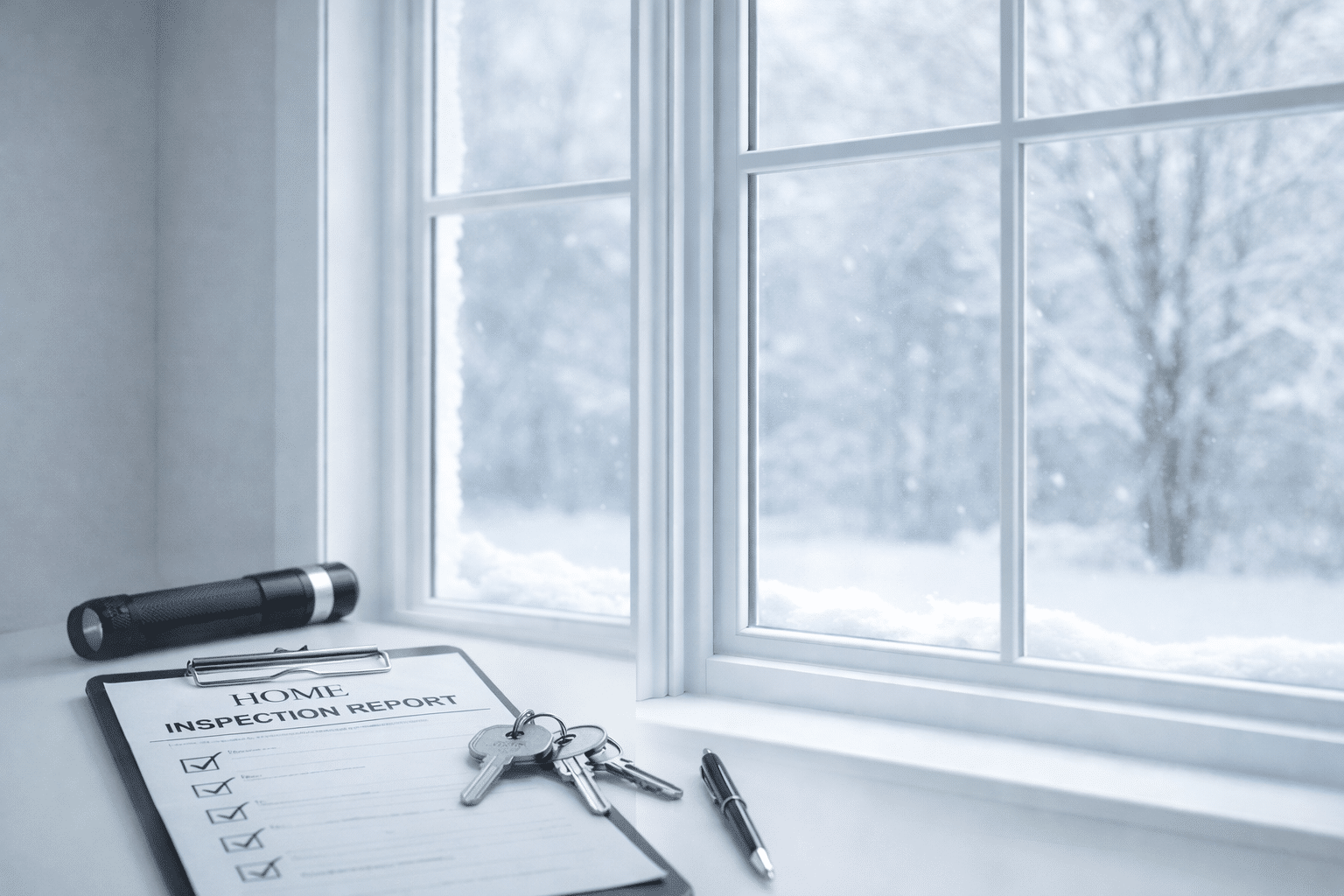
Buying a home during the winter can raise questions about how much an inspection can really uncover. Cold temperatures, snow, and shorter days can limit visibility and make buyers worry that important issues might be missed. In reality, winter inspections are still highly effective, but they come with seasonal considerations that are important to understand.
In this article, we’ll explain common winter-related inspection issues seen in Maryland homes, what’s normal for the season, and what deserves closer attention during a winter home inspection.
Why Winter Inspections Are Different?
Winter conditions don’t prevent inspectors from performing a thorough evaluation, but they do change what’s visible and accessible. Snow cover, ice, and frozen ground can limit access to some exterior components, such as roof surfaces, grading, and drainage. These limitations are documented in the inspection report, along with recommendations for follow-up once conditions improve.
At the same time, winter weather can reveal issues related to comfort, energy efficiency, and system performance that may not be as noticeable during warmer months.
What Winter Conditions Can Reveal Inside the Home?
Cold weather often makes interior issues easier to identify. During winter inspections, inspectors commonly observe drafty windows or doors, uneven heating between rooms, window condensation, and signs of past moisture intrusion in basements or crawlspaces.
Heating systems are also operating under real-world conditions during winter. This allows inspectors to evaluate basic functionality, venting, and how evenly heat is distributed throughout the home. While inspections don’t predict future performance, winter operation can highlight concerns that warrant further evaluation.
What’s Normal in Winter and What Isn’t?
Not every winter-related observation indicates a problem. Some conditions are seasonal and expected, while others may indicate underlying concerns.
Often normal during winter:
- Minor window condensation during cold snaps
- Snow-covered roof areas limiting visibility
- Frozen exterior hose bibs that can’t be tested
Worth closer attention:
- Significant temperature differences between rooms
- Excessive moisture or visible staining indoors
- Evidence of ongoing water intrusion or poor ventilation
A clear inspection report helps distinguish typical winter conditions from issues that may require attention.
Maryland-Specific Home Considerations
Homes in the greater Baltimore area often feature basements, older construction styles, and a mix of heating systems. Many properties have been updated over time, which can result in inconsistent insulation, ventilation, or system upgrades.
Inspectors familiar with Maryland housing stock recognize these patterns and factor them into their evaluations, particularly during colder months.
25 Years of Inspecting Maryland Homes
After 25 years of inspecting homes throughout Maryland, one consistent takeaway is that winter inspections remain highly effective when expectations are properly set. Seasonal limitations are clearly documented, follow-up recommendations are provided when appropriate, and many important issues are identified because systems are operating under real winter conditions.
Experience plays a critical role in interpreting winter findings accurately and helping buyers understand what matters most.
Planning Your Home Inspection
If you’re purchasing a home during the winter, scheduling an inspection early in the process can help clarify what can be evaluated immediately and what may require follow-up later. An experienced inspector can explain seasonal limitations, identify current concerns, and help you plan next steps.
If you’d like to schedule a home inspection in Maryland or the greater Baltimore area, a qualified inspection team can help you understand what to expect during a winter evaluation.
Final Thoughts
A home inspection is meant to inform, not overwhelm. Winter conditions introduce unique considerations, but they can also reveal valuable information about how a home performs during cold weather. Understanding what inspectors can and cannot evaluate in winter helps buyers move forward with confidence.
Check out our Facebook page for more info!