
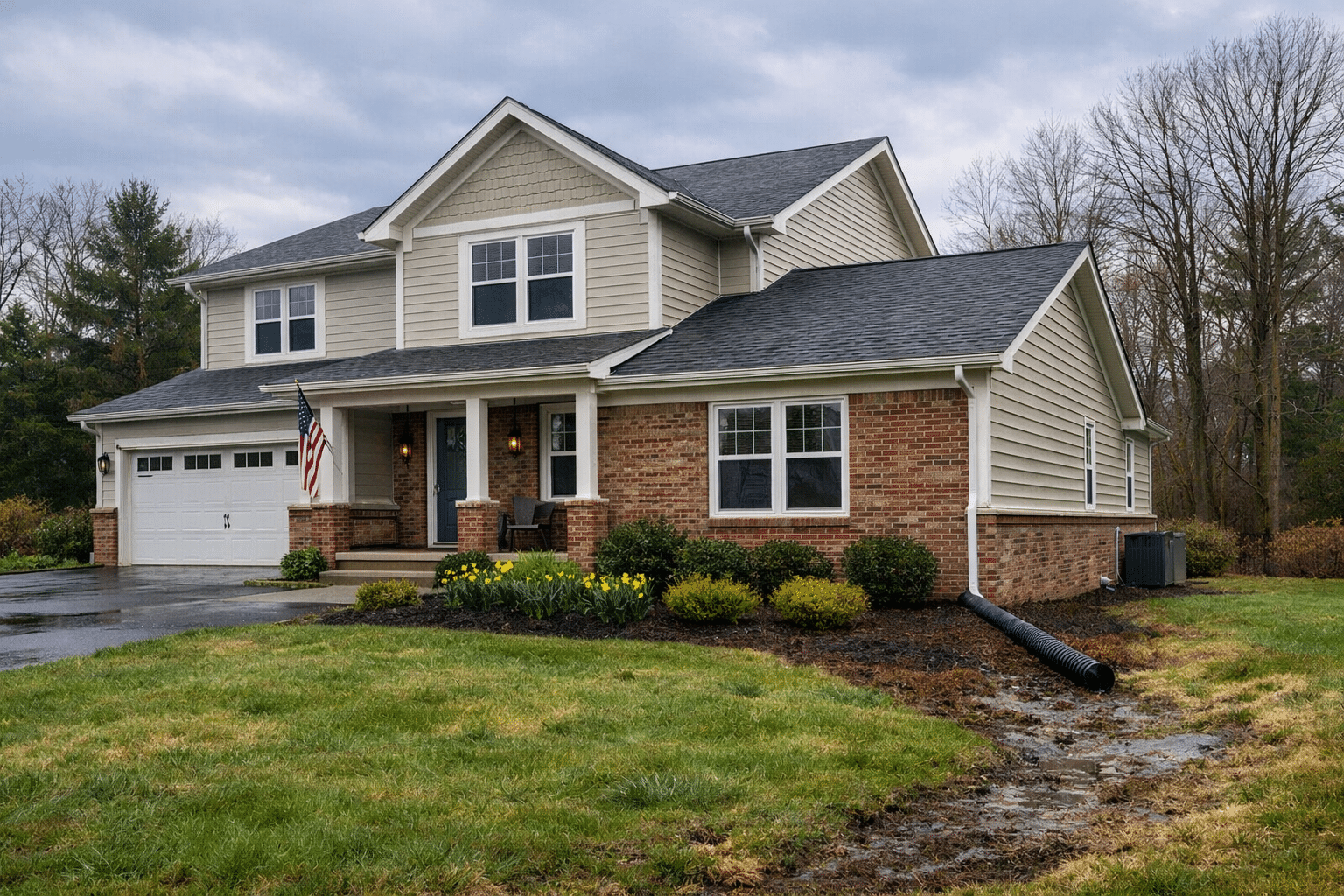
As winter transitions into spring across the greater Baltimore area, homes begin to show the effects of colder temperatures, moisture, and freeze thaw cycles. For homebuyers and homeowners, early spring is one of the most important times of year to pay attention to exterior conditions.
A professional home inspection during this season often reveals patterns that developed over the winter months. Understanding what inspectors commonly observe in early spring can help buyers make informed decisions and help homeowners stay ahead of maintenance.
Below are the most common exterior issues we evaluate during spring inspections in Maryland.
Roof Surface Wear After Winter
Maryland winters bring temperature swings, occasional snow accumulation, and heavy rain. These conditions can accelerate normal wear on roofing materials.
During early spring inspections, we often look for:
• Shingle lifting or curling
• Minor granule loss
• Flashing separation around chimneys and roof penetrations
• Gutter edge deterioration
• Debris buildup in roof valleys
Not every condition indicates failure. In many cases, findings are maintenance related or consistent with the roof’s age. The goal of the inspection is to determine whether the roof is performing as intended and whether repairs or monitoring are recommended.
Gutter and Downspout Conditions
Winter debris and ice buildup can affect how gutters perform once spring rains begin.
Common observations include:
• Loose gutter sections
• Improper downspout discharge near the foundation
• Blockages from leaves or sediment
• Areas where water may overflow during heavy rain
Proper drainage is critical because water that discharges too close to the foundation can contribute to soil saturation. Extending downspouts and maintaining clear gutters are often simple corrections that improve performance.
Exterior Grading and Drainage Patterns
Freeze thaw cycles can shift soil around the perimeter of the home. As snow melts and spring rain increases, grading issues become more noticeable.
Inspectors evaluate:
• Negative grading toward the foundation
• Settlement near foundation walls
• Low areas where water may collect
• Soil erosion along walkways and patios
In many cases, regrading or minor soil adjustments can improve water management. Identifying these patterns early helps prevent long term moisture concerns.
Siding and Exterior Wall Surfaces
Temperature changes can cause siding materials to expand and contract. During spring, we look for conditions such as:
• Minor siding separation
• Caulk deterioration around windows and doors
• Paint wear on trim components
• Small cracks in masonry surfaces
These are typically maintenance items rather than structural concerns. Addressing exterior sealing early in the season improves energy performance and helps prevent moisture intrusion.
Deck and Porch Components
Deck framing and surface boards are exposed year round. Snow accumulation and moisture can affect fasteners and connection points.
During inspection, we review:
• Ledger board attachment
• Guardrail stability
• Surface board condition
• Post and beam contact with soil
In the Baltimore area, deck maintenance is especially important as outdoor use increases in spring. Ensuring components are secure supports safe use throughout the season.
Foundation Surface Observations
Spring is often when minor foundation cracks become more visible due to moisture contrast.
It is important to understand that many hairline cracks are consistent with normal concrete shrinkage. During an inspection, we assess:
• Crack width and pattern
• Signs of displacement
• Evidence of active moisture penetration
• Efflorescence or mineral staining
Not all cracks indicate structural movement. The evaluation focuses on distinguishing cosmetic conditions from those that may warrant further review.
Exterior HVAC Equipment
As temperatures begin to rise, air conditioning systems start transitioning back into use.
Exterior condenser units are evaluated for:
• Debris buildup
• Clearance from vegetation
• Level placement
• Visible refrigerant line insulation condition
Early spring is a good time to service cooling systems before consistent warm weather arrives. Ensuring proper airflow and maintenance supports system longevity.
Why Spring Inspections Matter for Buyers
For buyers in the greater Baltimore area, early spring inspections provide valuable seasonal context. Snow has melted, rainfall patterns have begun, and exterior systems are actively responding to changing conditions.
Rather than focusing on worst case scenarios, the purpose of a spring inspection is to identify:
• Performance concerns
• Routine maintenance needs
• Areas to monitor over time
• Conditions that may require further evaluation
This balanced approach helps buyers make informed decisions without unnecessary alarm.
Supporting Homeowners Through Seasonal Change
For current homeowners, spring is an ideal time to evaluate exterior conditions before summer humidity arrives. Addressing small drainage corrections, sealing gaps, and maintaining roof components often prevents larger issues later in the year.
A professional inspection provides clarity. It separates normal aging from conditions that require attention and offers practical recommendations tailored to Maryland’s climate patterns.
As the season transitions, staying proactive ensures your home continues to perform as designed.
Check out our reviews!