

Exterior drainage plays an important role in protecting a home from moisture related issues. During periods of heavy rain, the way water moves around the property can affect the foundation, basement, crawlspace, and surrounding soil conditions.
During a home inspection, visible drainage conditions around the exterior are evaluated to identify areas where water may collect or move toward the structure. Understanding these conditions helps homeowners and buyers recognize improvements that may support long term moisture control.
Why Exterior Drainage Matters
Water should move away from the home in a controlled manner.
Proper drainage helps:
• Reduce water accumulation near the foundation
• Limit soil saturation around the structure
• Minimize moisture intrusion risks
According to the International Association of Certified Home Inspectors, exterior drainage conditions are a major factor in managing moisture around residential structures.
Grading Around the Home
The slope of the soil around the home affects how water drains after rainfall.
Inspectors often look for:
• Areas sloping toward the foundation
• Low spots where water collects
• Erosion near the structure
• Uneven settlement around exterior walls
Proper grading helps direct water away from the home.
Downspout Extensions
Downspouts are designed to carry roof runoff away from the foundation.
Common observations include:
• Missing extensions
• Discharge too close to the home
• Water pooling near downspout exits
• Improper drainage direction
Extending discharge farther away can improve drainage performance.
Swales and Drainage Paths
Some properties use shallow channels or swales to direct water movement.
Inspectors may observe:
• Poorly defined drainage paths
• Areas where water becomes trapped
• Landscaping that blocks runoff flow
Maintaining clear drainage routes helps prevent water accumulation.
Hardscape and Surface Drainage
Patios, walkways, and driveways can also affect water movement.
Common concerns include:
• Surfaces sloping toward the home
• Cracks allowing water collection
• Areas where runoff is redirected improperly
Surface drainage conditions may contribute to moisture concerns over time.
Landscaping Considerations
Landscaping can influence how moisture collects around the home.
Inspectors may note:
• Mulch piled against siding
• Dense vegetation trapping moisture
• Irrigation oversaturating soil near the foundation
Managing landscaping helps support proper drying conditions.
Signs of Drainage Concerns
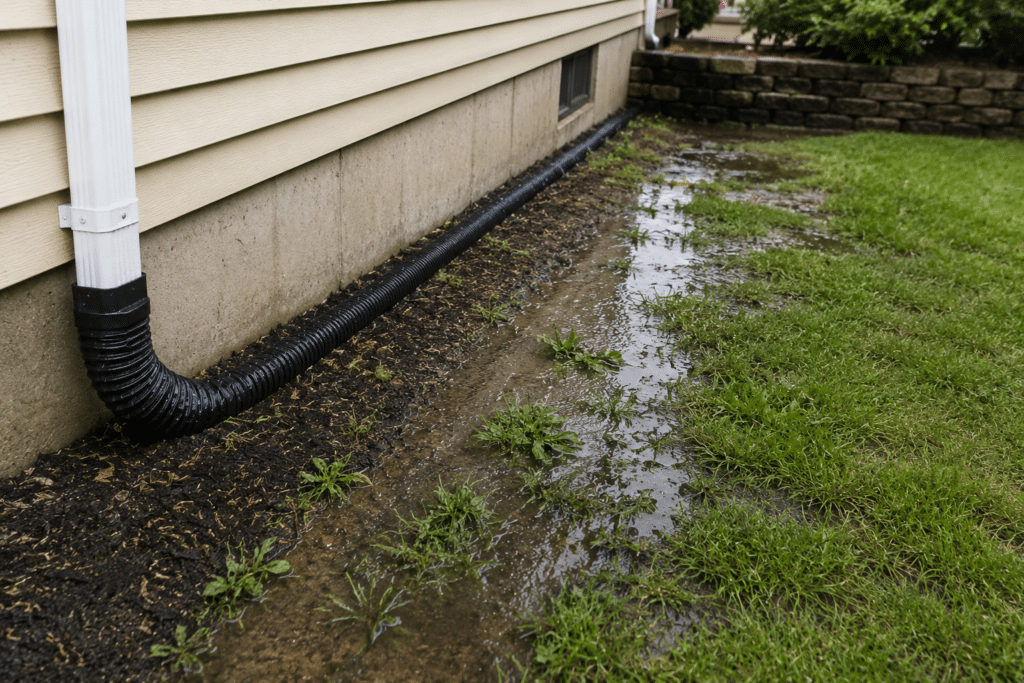
Visible indicators may suggest exterior drainage issues.
These can include:
• Standing water after rainfall
• Soil erosion
• Moisture staining near foundation walls
• Damp basement or crawlspace conditions
These observations help identify areas that may benefit from improvement.
When Improvements May Be Recommended
Many exterior drainage concerns can be improved through maintenance or grading adjustments.
Recommendations may include:
• Extending downspouts
• Improving grading
• Adjusting landscaping
• Clearing drainage paths
As discussed in our article on Gutters and Downspouts That Cause Foundation Problems, controlling water at the exterior is one of the most effective ways to help protect the home.
Supporting Long Term Moisture Control
Exterior drainage improvements can help reduce moisture related stress on the home over time.
Understanding how water moves around the property allows homeowners to make informed maintenance decisions and support better long term performance.