
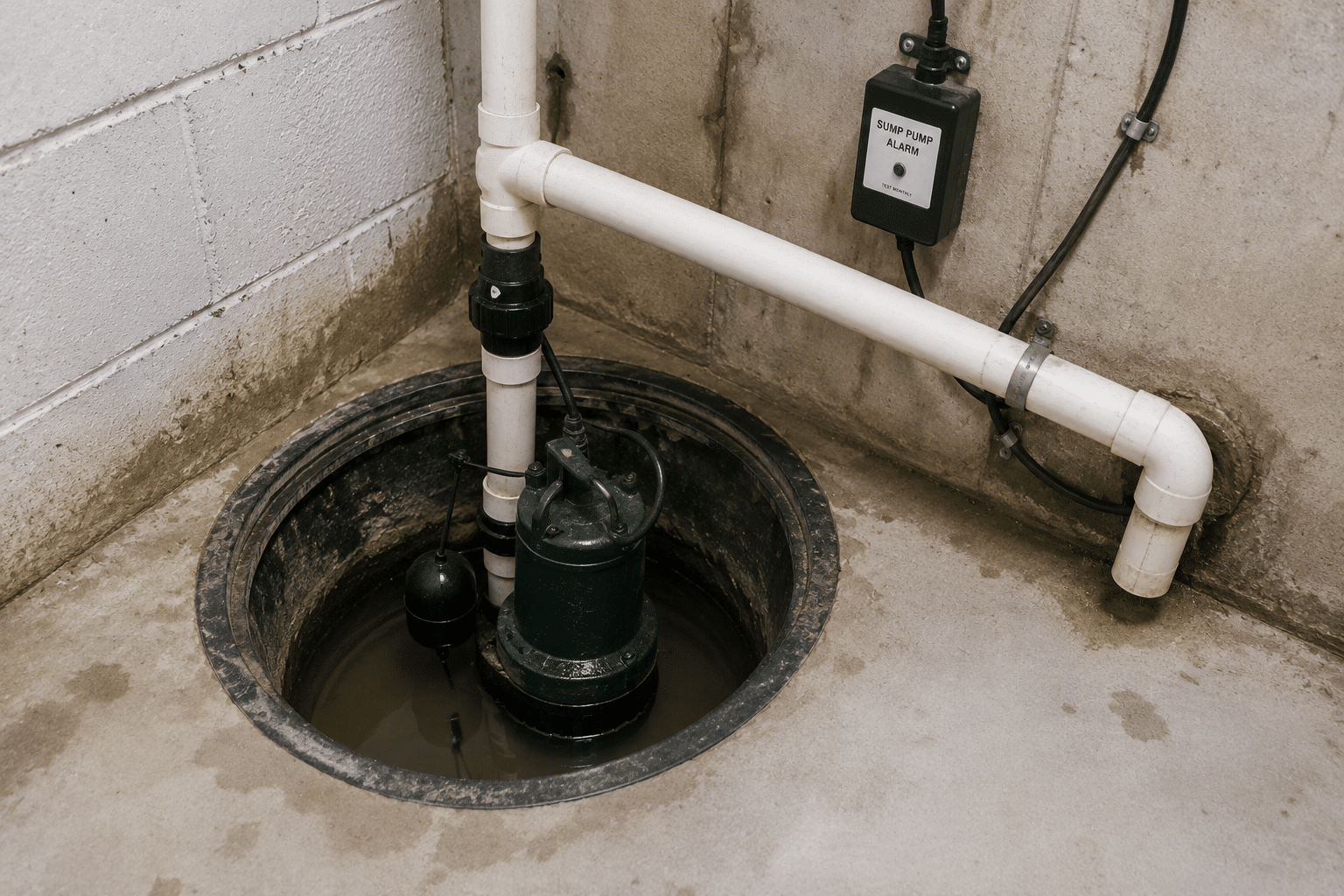
Sump pump systems are designed to help manage groundwater around the foundation and reduce the likelihood of water accumulation in basements or crawlspaces. In many Maryland homes, these systems become especially important during periods of heavy rain.
During a home inspection, sump pump systems are visually evaluated for accessible conditions and general operation. Understanding how these systems function helps homeowners and buyers better interpret inspection findings.
What a Sump Pump System Does
A sump pump system collects water in a basin, commonly called a sump pit, and pumps it away from the home through a discharge line.
These systems help:
• Reduce water accumulation below grade
• Manage groundwater near the foundation
• Support moisture control in basement areas
According to the International Association of Certified Home Inspectors, sump pump systems are commonly used in homes where groundwater or drainage conditions increase the likelihood of basement moisture.
Common Components Inspectors Evaluate
Sump pump systems contain several visible components that are evaluated during an inspection.
Inspectors may observe:
• Sump pit condition
• Pump placement and general installation
• Discharge pipe connection
• Presence of a float switch
• Visible electrical connection
These observations help determine whether the system appears properly configured at the time of inspection.
Discharge Line Considerations
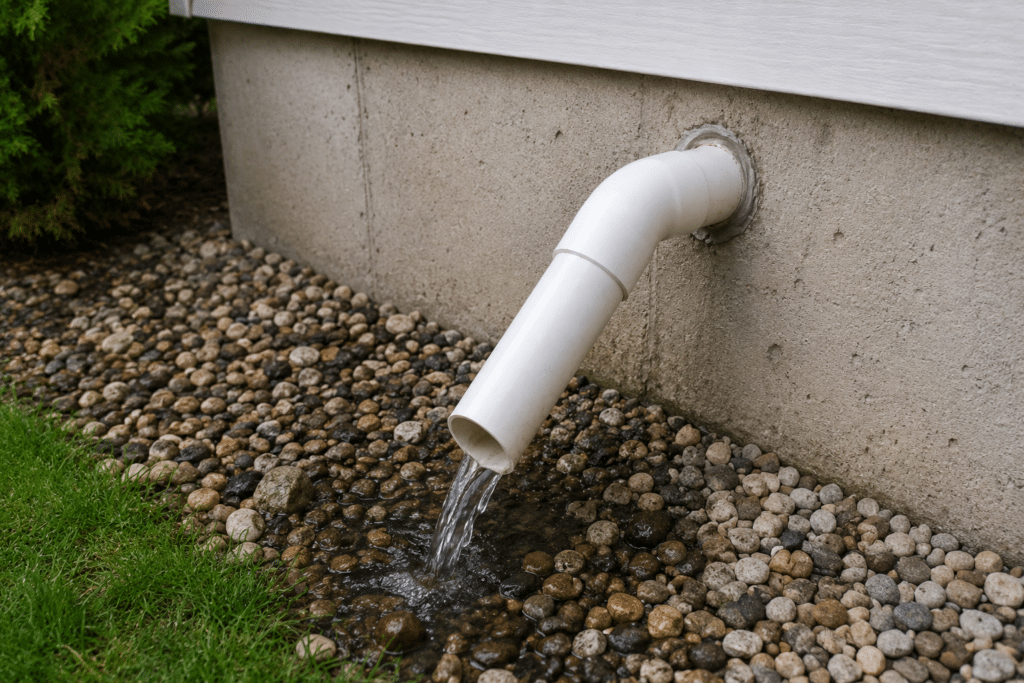
The discharge line carries water away from the home.
Inspectors often look for:
• Proper connection to the pump
• Exterior discharge location
• Signs of leakage or improper routing
• Discharge points too close to the foundation
Proper discharge helps reduce the chance of water cycling back toward the structure.
Signs of Moisture Around the Sump Area
Conditions around the sump area can provide insight into moisture activity.
Common observations include:
• Damp concrete around the pit
• Water staining near the system
• Minor rust or corrosion on components
• Musty odors in basement areas
These conditions may indicate previous or ongoing moisture exposure.
Backup Systems and Secondary Protection
Some homes include backup sump systems to help during power outages or pump failure.
These may include:
• Battery backup systems
• Secondary sump pumps
• Water powered backup systems
While not present in every home, backup systems can provide additional protection during heavy rain events.
Testing During a Home Inspection
Inspectors may test sump pumps using accessible controls or by adding water to the pit when appropriate.
Testing generally focuses on:
• Basic pump activation
• Response of the float mechanism
• Visible operation at the time of inspection
A home inspection does not predict future performance, but it can help identify visible concerns.
Maintenance and Monitoring
Like other home systems, sump pumps benefit from routine maintenance.
Homeowners should periodically monitor:
• Pump operation
• Pit cleanliness
• Discharge flow
• Backup system status if present
Regular monitoring can help reduce unexpected issues.
When Further Evaluation Is Recommended
If visible concerns are observed, further evaluation or servicing may be recommended.
This may include:
• Irregular pump operation
• Visible damage to components
• Improper discharge conditions
• Signs of ongoing moisture accumulation
As discussed in our article on Basement Water Intrusion After Heavy Rains, managing water around the home often involves multiple systems working together.
Supporting Long Term Moisture Control
Sump pump systems play an important role in managing moisture conditions below grade. Understanding how these systems function helps homeowners better maintain basement conditions and respond to drainage concerns over time.
With regular monitoring and proper drainage management, sump systems can help support long term moisture control in many homes.