
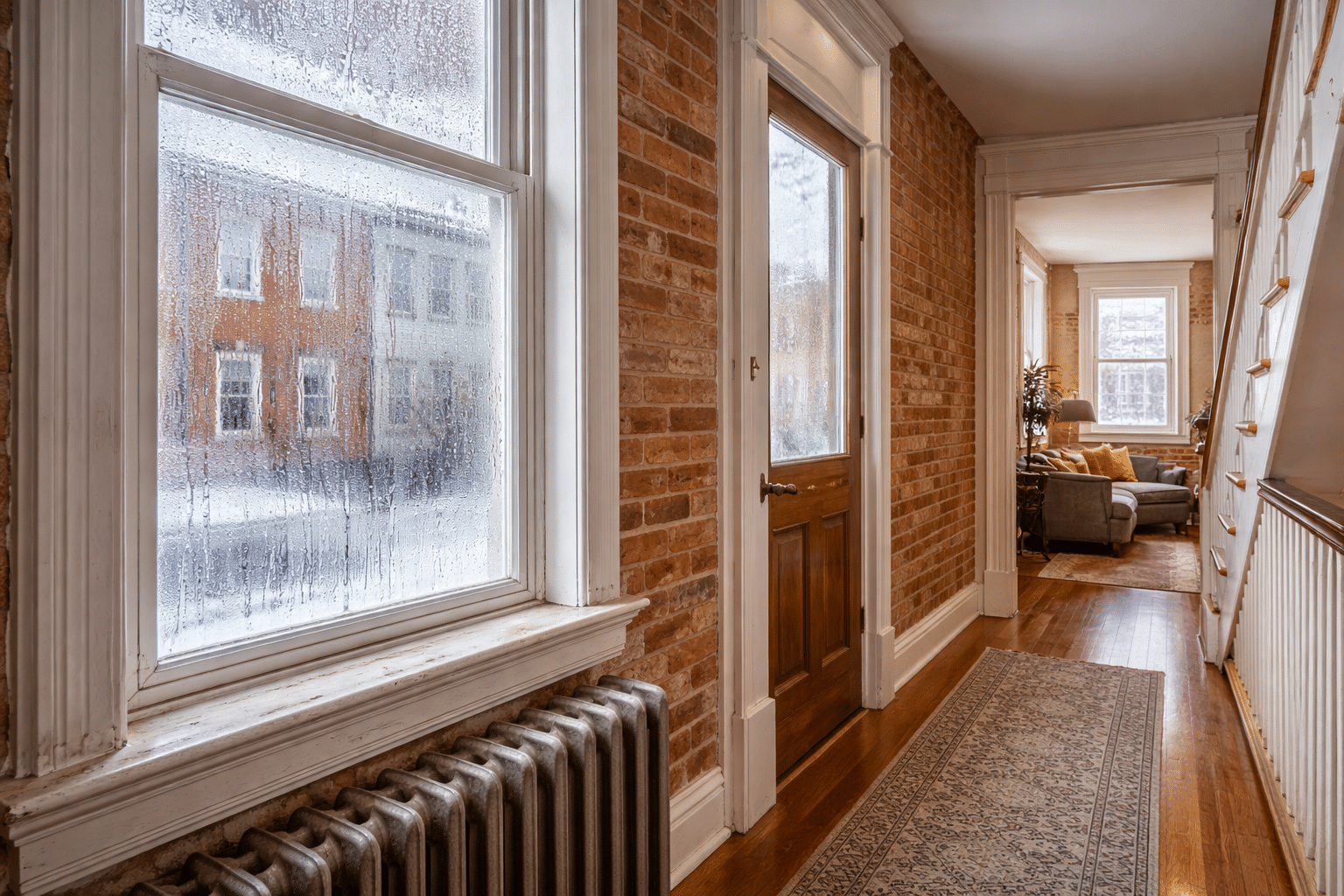
Older rowhomes are a defining feature of many Maryland neighborhoods, especially throughout Baltimore and surrounding areas. These homes offer character and history, but they also behave differently during winter months when it comes to moisture and indoor humidity.
Understanding how older rowhomes manage humidity during colder seasons helps buyers and homeowners interpret inspection findings more clearly and maintain comfort throughout the year.
Why Winter Humidity Behaves Differently in Rowhomes
During winter, homes are sealed tightly to conserve heat. Windows remain closed, ventilation decreases, and heating systems run consistently. In older rowhomes, original construction methods and limited insulation can influence how indoor air moves and how moisture accumulates.
Activities such as cooking, showering, and laundry introduce moisture into the air. Without adequate ventilation, humidity can build up and condense on cooler surfaces.
Common Humidity Patterns in Older Rowhomes
Inspectors often observe seasonal humidity patterns that are typical in older structures. These may include:
Light condensation on windows
Moisture buildup on exterior walls
Minor staining in attic or upper level areas
Elevated humidity in finished basements
These conditions are often related to airflow and insulation differences rather than isolated defects.
Brick Construction and Moisture Movement
Many Maryland rowhomes feature brick exterior walls. Brick can absorb and release moisture depending on weather conditions. During winter, temperature differences between interior and exterior surfaces can lead to condensation in certain areas of the home.
Understanding how brick interacts with indoor humidity helps explain why some moisture patterns are seasonal rather than structural concerns.
Ventilation and Airflow Considerations
Older homes were not always built with modern mechanical ventilation systems. As a result, airflow may be less balanced compared to newer construction.
Inspectors evaluate:
Bathroom and kitchen exhaust performance
Attic ventilation pathways
Window condition and sealing
Signs of prolonged humidity exposure
These observations provide context for how effectively the home manages indoor moisture.
When Humidity Deserves Closer Attention
Not every winter humidity observation indicates a problem. However, certain patterns may warrant further evaluation, including:
Persistent condensation beyond cold weather
Visible mold growth
Peeling paint or deteriorating finishes
Strong musty odors
Clear documentation helps distinguish between seasonal humidity behavior and conditions that may require attention.
Maryland Climate and Historic Housing
Maryland’s winter temperatures combined with humid summers create unique challenges for historic housing stock. Many older rowhomes have been renovated over time, sometimes resulting in mixed insulation and ventilation approaches that influence moisture behavior.
Experience with local construction patterns allows inspectors to interpret these findings accurately.
Planning Ahead as a Buyer or Homeowner
Managing humidity in older rowhomes often involves improving ventilation, monitoring indoor humidity levels, and addressing minor airflow adjustments. Small improvements can significantly enhance comfort and reduce seasonal moisture concerns.
An experienced inspection team can help explain winter humidity findings and guide homeowners toward practical solutions.
Final Thoughts
Older rowhomes offer lasting appeal and architectural character. During winter months, understanding how humidity behaves in these homes allows buyers and homeowners to make informed decisions and maintain healthy indoor conditions with confidence.
Check out our reviews!