
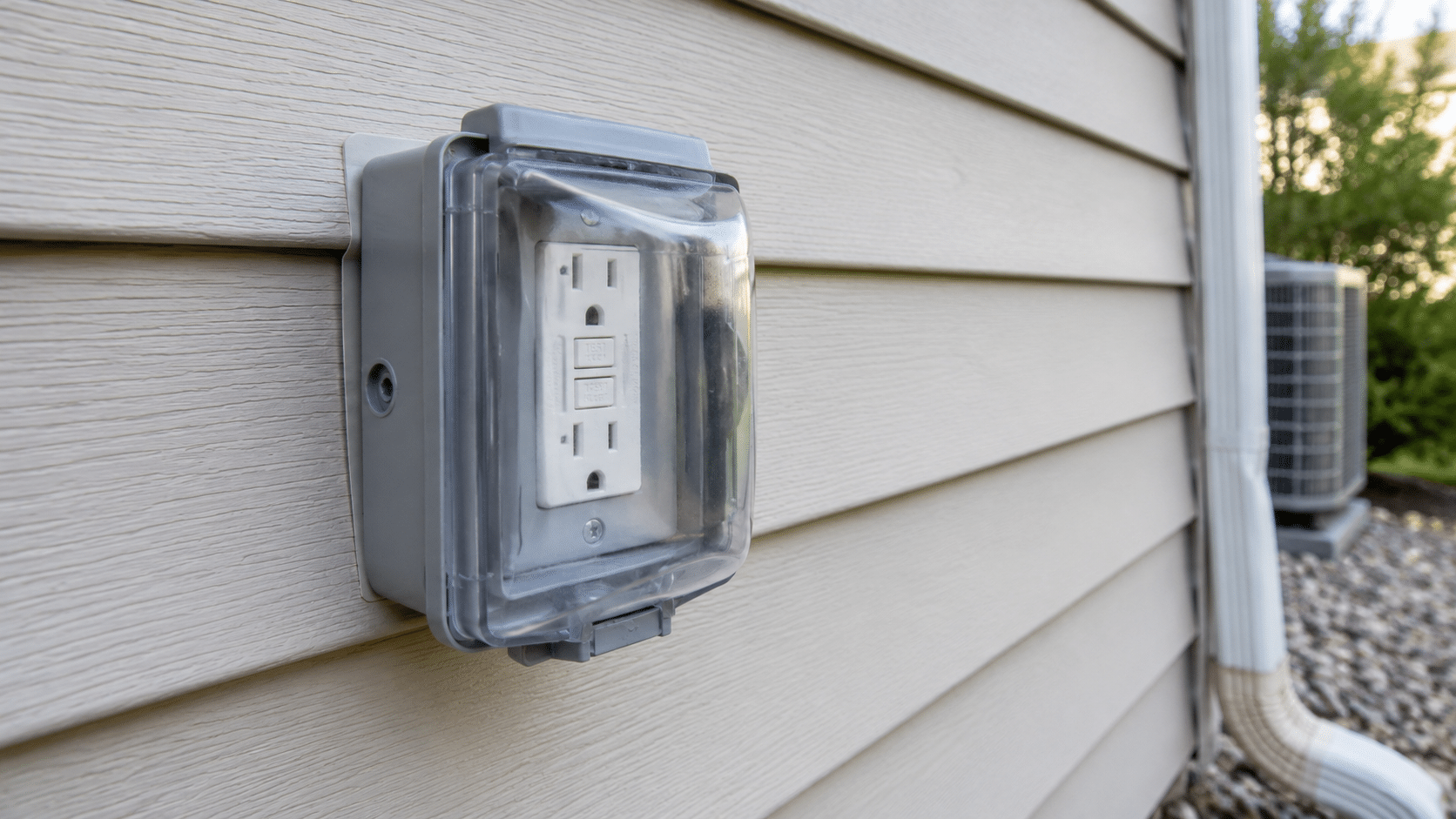
Outdoor electrical systems are exposed to changing weather conditions throughout the year. Because these areas are more susceptible to moisture exposure, proper safety measures are especially important.
During a home inspection, accessible exterior electrical components are visually evaluated for conditions that may affect safety and performance. Understanding what inspectors look for can help homeowners and buyers better interpret inspection findings.
Why Outdoor Electrical Safety Matters
Outdoor electrical components are designed to provide convenient access to power while helping reduce the risk of electrical shock.
Proper installation and maintenance help:
• Support safe use of exterior outlets
• Protect electrical equipment from moisture exposure
• Reduce the likelihood of electrical hazards
According to the Electrical Safety Foundation International, outdoor electrical safety practices play an important role in reducing preventable electrical injuries around the home.
What Is GFCI Protection?
Ground Fault Circuit Interrupter (GFCI) devices are designed to shut off power when an imbalance in electrical current is detected.
These devices help provide additional protection in areas where moisture may be present.
GFCI protection is commonly found near:
• Exterior receptacles
• Garages
• Bathrooms
• Kitchens
• Unfinished basements
What Inspectors Evaluate Outdoors
Home inspectors perform a visual evaluation of accessible exterior electrical components.
Inspectors may observe:
• Exterior receptacle condition
• Presence of weather resistant covers
• Evidence of physical damage
• General operation of accessible GFCI devices
• Visible safety concerns around electrical equipment
The evaluation reflects conditions present at the time of the inspection.
Weather Resistant Covers
Exterior outlets should have covers designed to help protect against moisture intrusion.
Inspectors commonly note:
• Missing covers
• Damaged covers
• Covers that do not close properly
Maintaining these components helps support safer outdoor electrical use.
Common Conditions Observed
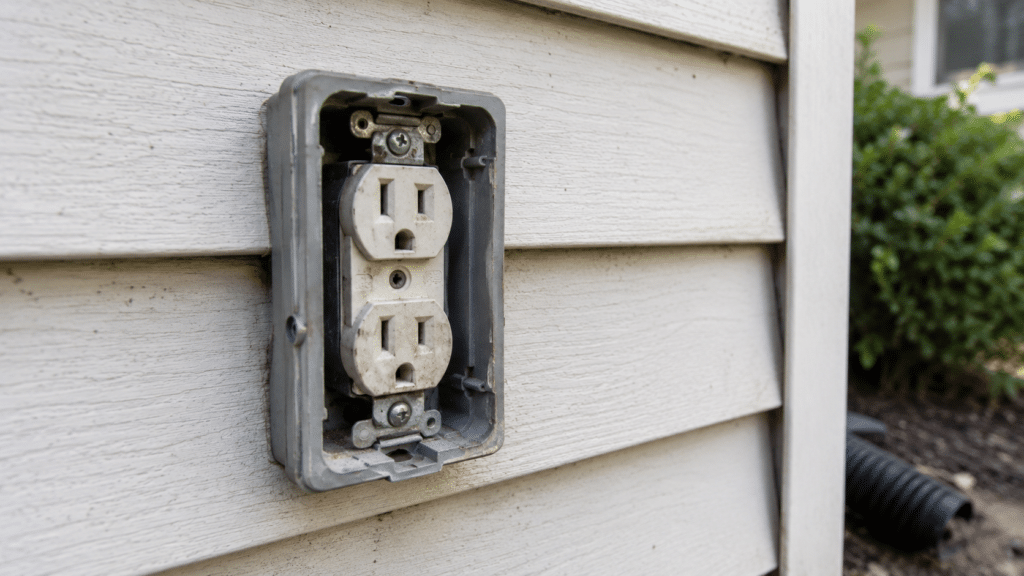
Inspectors may identify visible conditions that warrant further evaluation.
Examples include:
• Damaged receptacles
• Missing protective covers
• GFCI devices that do not respond as expected during testing
• Loose or deteriorated exterior components
These observations may result in recommendations for further review.
Seasonal Outdoor Electrical Use
Exterior outlets often see increased use during warmer months.
Common uses include:
• Landscaping equipment
• Outdoor entertainment areas
• Holiday lighting installations
• Pool and patio accessories
Routine monitoring of outdoor electrical components can help support safe operation.
When Further Evaluation Is Recommended
A home inspection provides a visual assessment of accessible electrical components.
If concerns are observed, further evaluation by a licensed electrician may be recommended.
As discussed in our article on Electrical Panel Safety and Common Concerns, maintaining safe electrical systems involves multiple components working together throughout the home.
Supporting Long Term Electrical Safety
Outdoor electrical systems are an important part of everyday home use. Understanding the role of GFCI protection and maintaining exterior electrical components can help support safer conditions around the property.
Regular inspections and prompt attention to visible concerns can contribute to long term electrical safety.