
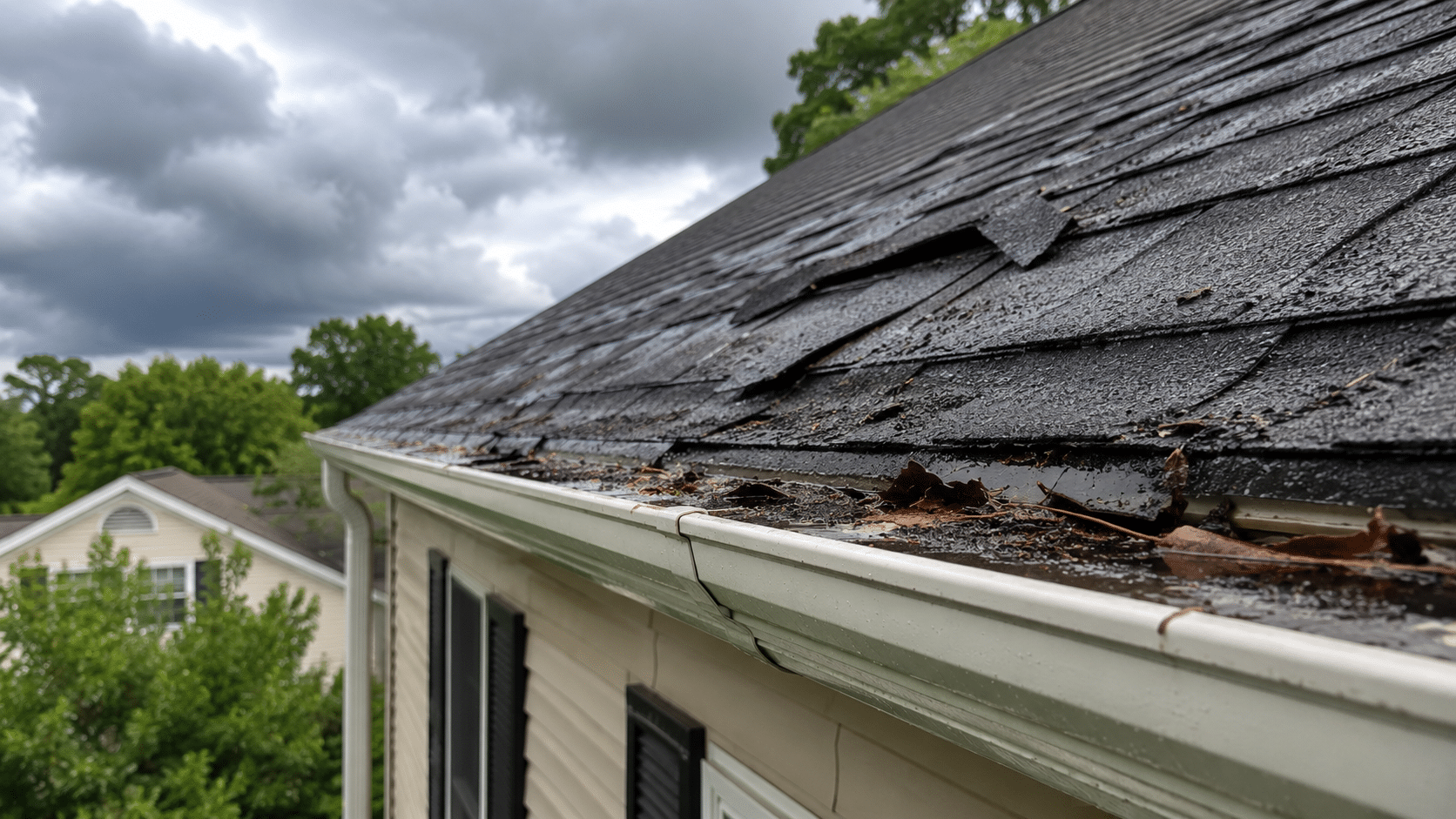
Late summer in Maryland often brings a stretch of strong thunderstorms, and by the time July winds down, many homes have been through at least one round of heavy rain, wind, or hail. Roofs and gutter systems take the brunt of that weather, and it’s not always obvious from the ground when something has been affected. During inspections this time of year, roofing and drainage components get a closer look, since storm damage can be easy to miss until it leads to a bigger problem.
Why It Matters
A roof is one of the most important protective layers a home has, and damage that goes unnoticed can lead to leaks, wood rot, or interior water damage well after the storm that caused it has passed. Gutters play a supporting role here too, since a system that isn’t draining properly can send water toward the foundation instead of away from it. Catching these issues early, whether during a routine inspection or a homeowner’s own walk-around after a storm, tends to be far simpler and less costly than addressing water damage once it has worked its way into the home.
What Inspectors Evaluate
During a late-summer inspection, a few areas of the roof and drainage system get particular attention:
- Shingle condition, including granule loss, lifted edges, or visible cracking
- Flashing around chimneys, vents, and skylights, which is a common point of water entry
- Gutter attachment and slope, to confirm water is draining toward downspouts rather than pooling
- Downspout discharge points, checking that water is directed well away from the foundation
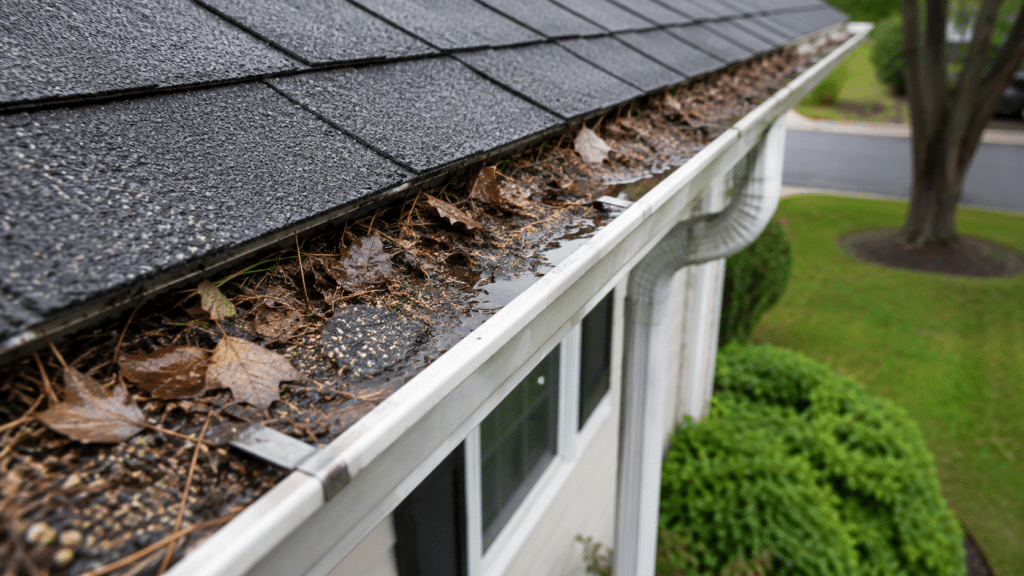
- Signs of debris buildup, which can cause overflow during heavy rain
Shingle Wear and Storm Impact
Wind and hail can cause damage that isn’t always visible from the ground. Lifted or cracked shingles, and granule loss that shows up as grit collecting in gutters, are common signs that a roof has taken on some stress during a storm. Inspectors look closely at these details, since even minor damage can create an entry point for water if left unaddressed.
Flashing and Water Entry Points
Flashing around chimneys, vents, and skylights is designed to keep water from working its way under the roofing material at these transition points. Because flashing is a common source of leaks, inspectors pay close attention to whether it remains properly sealed and secured, particularly after a season of heavy rain and temperature swings.
Gutters, Downspouts, and Drainage
Gutters that are clogged with leaves, seed pods, or granules can overflow during a heavy downpour, sending water down the side of the home rather than through the downspout system. Inspectors check that gutters are properly sloped and securely attached, and that downspouts extend far enough away from the home to prevent water from pooling near the foundation.
Seasonal Considerations
Maryland’s late summer storm season, which often brings fast-moving thunderstorms and occasional hail, puts roofing and drainage systems through real stress over a short period. According to the National Roofing Contractors Association, routine post-storm inspections can help homeowners identify wind and hail damage before it develops into a more significant leak, since some forms of shingle damage are not immediately visible without a closer look. This lines up with what inspectors commonly see locally: many roof issues discovered in late summer trace back to storm activity from earlier in the season rather than gradual wear.
Homes with existing moisture challenges are also worth a second look this time of year, since heavy rainfall can compound issues that started elsewhere. Our earlier post on crawlspace moisture and hidden problems in Maryland homes covers how water intrusion can show up in unexpected areas of a home, which is useful context for anyone noticing dampness after a heavy storm.
When Further Evaluation Is Recommended
A few signs point to a need for a closer look from a licensed roofing contractor:
- Visible granule loss collecting in gutters or downspouts
- Cracked, curled, or missing shingles
- Water stains on interior ceilings or walls following a storm
- Gutters pulling away from the fascia or sagging under weight
- Standing water near the foundation after rain
None of these signs necessarily mean a full roof replacement is needed. In many cases, a contractor can identify and repair the specific area affected.
Supporting Long-Term Maintenance and Prevention
A few consistent habits help keep a roof and drainage system performing well through the rest of storm season. Cleaning gutters regularly, especially after periods of heavy wind, prevents debris buildup that can lead to overflow. A visual check of the roofline from the ground after any significant storm can help catch obvious issues like missing shingles early. Confirming that downspouts extend well away from the foundation helps prevent water from pooling where it can eventually affect the home’s structure. Scheduling a professional roof inspection every few years, or after any particularly severe storm, gives homeowners a clearer picture of their roof’s condition heading into the next season.