
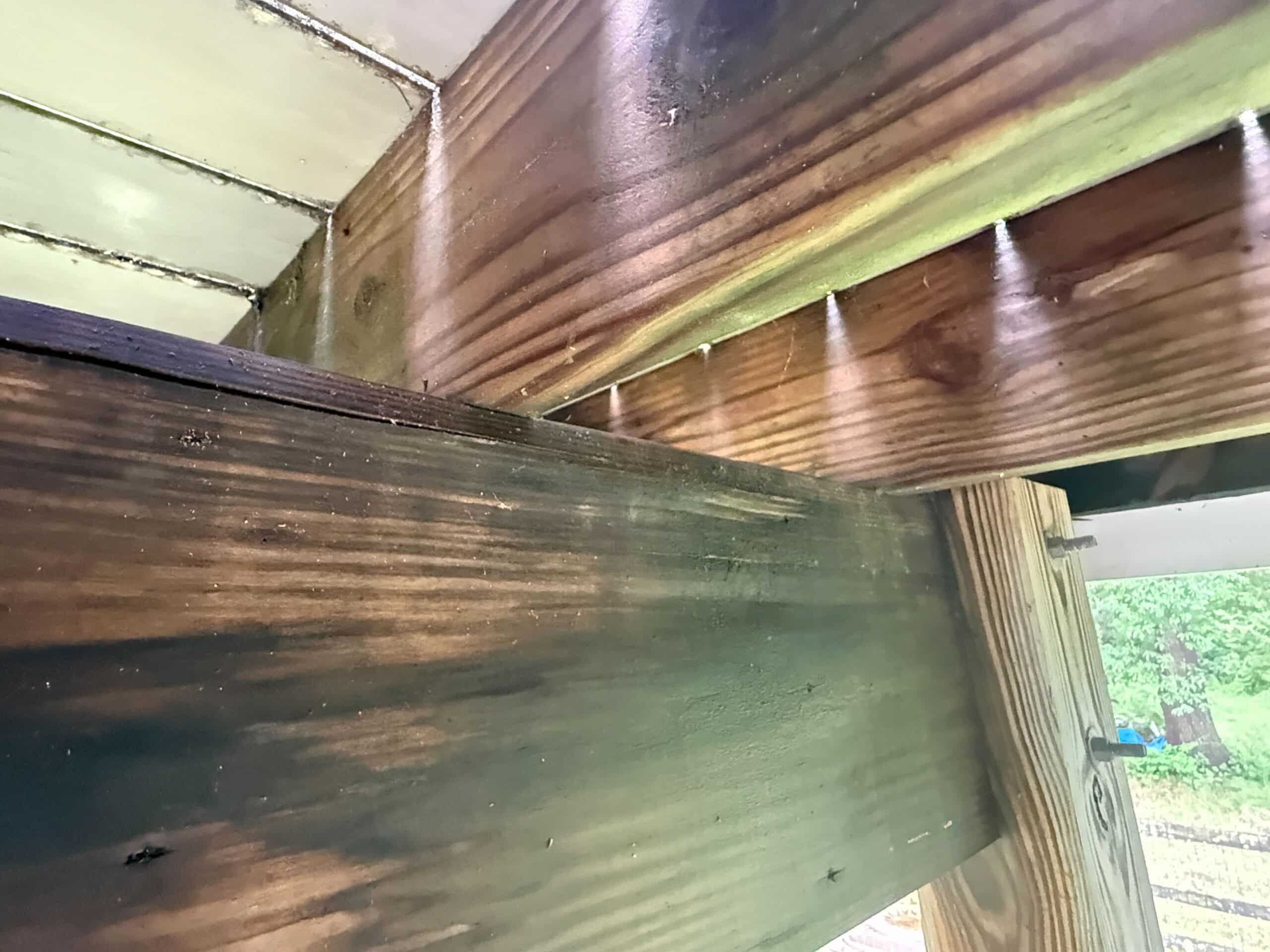
August tends to be one of the busiest months for backyard gatherings in Maryland, with decks and patios seeing steady use for cookouts, parties, and evenings outside. That extra weight and traffic makes this a good time to take a closer look at deck safety. During an inspection, decks and patios get specific attention, since problems here are often structural rather than cosmetic.
Why It Matters
A deck that looks solid from a distance can still have serious issues underneath. Because decks are exposed to weather year-round, connections and support components can weaken gradually without obvious visible signs. A structural failure involving a deck is one of the more serious risks a home can pose, particularly when a deck is holding more people than usual during a summer gathering. Catching problems early keeps outdoor spaces both enjoyable and safe.
What Inspectors Evaluate
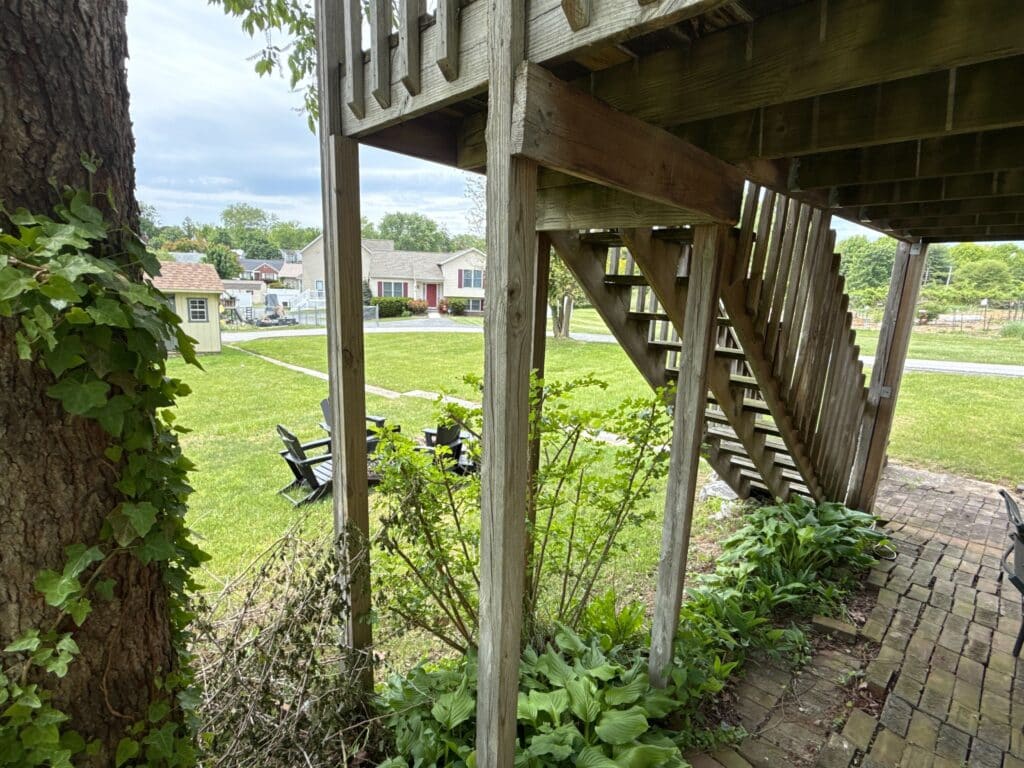
During a deck and patio inspection, a few components get particular attention:
- Ledger board attachment, where the deck connects to the home
- Support posts and footings, checking for rot, cracking, or movement
- Railing stability, especially on elevated decks
- Fastener condition, since corroded or missing hardware weakens connections over time
- Stair and step construction, checking for even rise and secure attachment
Ledger Board Connection
The ledger board attaches the deck directly to the house and carries a significant portion of the structure’s weight. Improper flashing or corroded fasteners at this connection are common causes of deck failures. Inspectors check that the ledger board is properly bolted, rather than simply nailed, and that flashing is directing water away from the connection point.
Support Posts and Footings
Support posts transfer the deck’s weight down to the footings below. Wood posts in direct contact with soil are especially prone to rot over time. Inspectors look for signs of decay near the base of each post and check that footings appear stable, without noticeable shifting or cracking.
Railings and Guardrails
Railings need to hold up under real pressure, particularly when a deck is crowded during a gathering. Inspectors test railings for looseness or excessive flex, and check baluster spacing to confirm it meets basic safety expectations. A railing that wobbles under light pressure is a sign worth addressing before it sees heavier summer use.
Seasonal Considerations
Maryland’s summer humidity and heat can accelerate wood decay in areas that stay damp longer than expected, particularly around ledger boards and post bases where water tends to collect. According to InterNACHI, roughly 90 percent of deck collapses occur because the deck ledger board separates from the house, letting the deck swing away, which is why proper ledger board attachment is one of the most important things a visual inspection can confirm. This lines up with common findings locally, where summer storms and consistent humidity contribute to gradual weakening in older or poorly maintained decks.
Outdoor electrical components near decks and patios are also worth checking this time of year, especially with more evening use for lighting and entertaining. Our post on outdoor electrical safety and GFCI protection covers what to look for with exterior outlets and fixtures, which pairs well with a broader deck safety check.
When Further Evaluation Is Recommended
A few signs point to a need for a closer look from a licensed contractor before a deck sees heavy use:
- Visible rot or soft spots in the ledger board or support posts
- Railings that move or flex noticeably under light pressure
- Rust stains or missing fasteners at connection points
- Uneven or sloped decking boards
- Any noticeable gap between the deck and the house at the ledger board
None of these signs necessarily mean the entire structure needs to be rebuilt. In many cases, a contractor can address the specific area of concern directly.
Supporting Long-Term Maintenance and Prevention
A few habits help keep a deck safe and structurally sound through the rest of the season. Regularly checking for loose fasteners and tightening or replacing them as needed prevents small issues from becoming bigger ones. Keeping the area under and around the deck clear of debris and standing water reduces the moisture that contributes to wood rot. Applying a fresh sealant every couple of years protects wood from sun and moisture damage. A periodic walk-around, checking railings, stairs, and the ledger board connection, makes it easier to catch developing problems before a deck sees its next big gathering.