
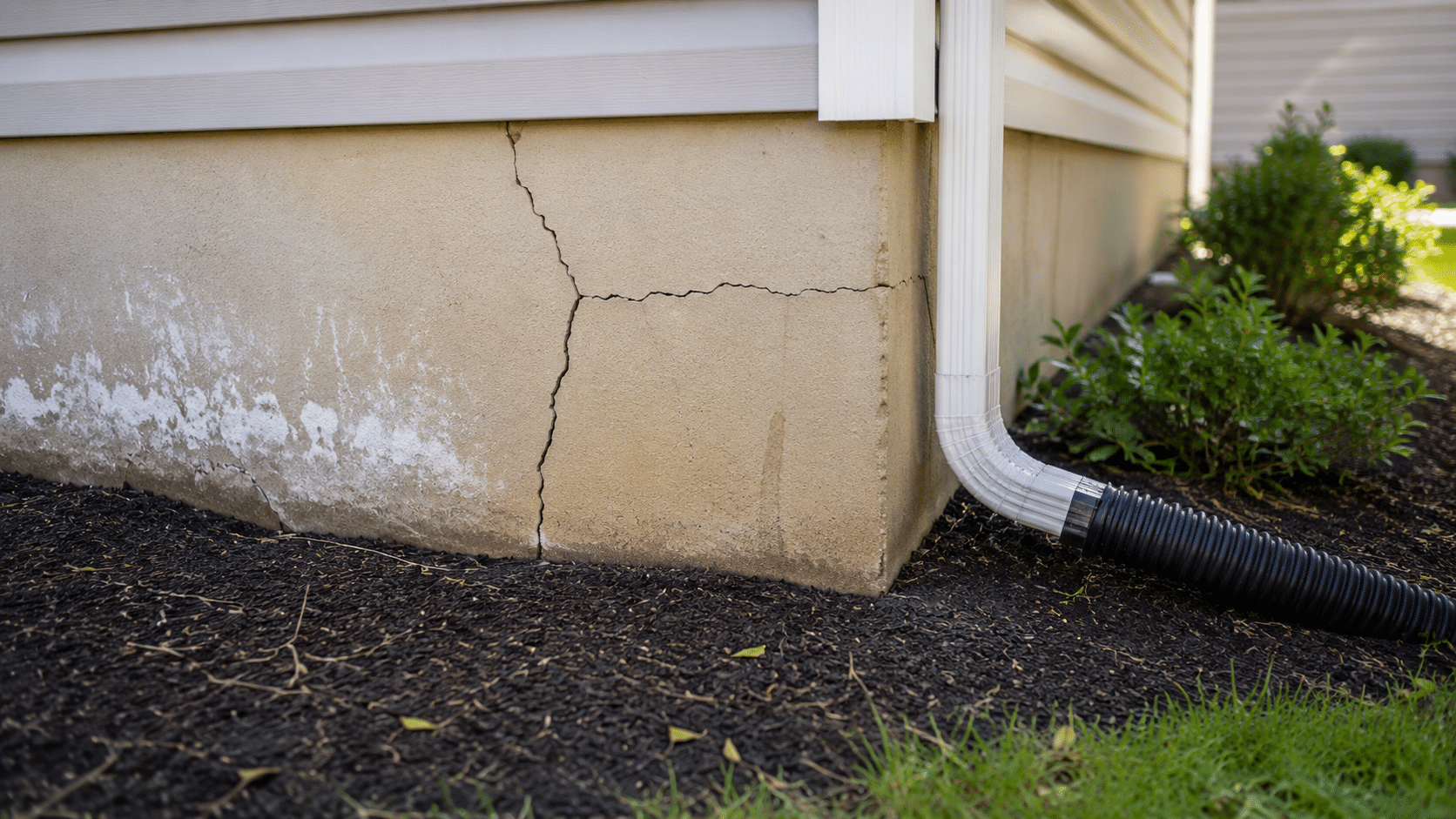
By late August, Maryland homes have typically been through a stretch of hot, dry weather punctuated by occasional heavy storms. That back and forth between dry soil and sudden rainfall can cause the ground around a home to shift more than usual, which is why foundation and exterior checks get particular attention this time of year.
Why It Matters
Soil naturally expands and contracts with moisture changes, and a summer of alternating drought and downpours can accelerate that movement. Small foundation cracks or gaps around exterior trim are easy to overlook, but they can be early signs of a larger settling issue. Addressing these signs while they’re still minor is generally far simpler than waiting until a crack has widened or water intrusion has caused additional damage.
What Inspectors Evaluate
During a late-summer exterior and foundation check, a few areas get particular attention:
- Foundation walls, checking for new or widening cracks
- Grading around the home, confirming soil slopes away from the foundation
- Efflorescence, a white mineral deposit that often points to moisture movement through masonry
- Exterior trim and siding gaps, which can develop as a home settles
- Downspout discharge points, checking that water is directed well away from the foundation
Foundation Cracks and Soil Movement
Hairline cracks in a foundation wall are common and often not a structural concern on their own. Inspectors look for cracks that are new, widening, or accompanied by other signs like uneven door and window operation. These patterns can indicate the soil beneath the foundation is shifting more than expected, often as a result of extreme dry-to-wet swings over the course of a season.
Grading and Drainage Around the Home
Soil that slopes toward a house, rather than away from it, allows water to pool near the foundation instead of draining off. Over time, this can contribute to both foundation movement and basement or crawlspace moisture problems. Inspectors check that grading directs water away from the home and that downspouts extend far enough to avoid discharging right at the foundation.
Efflorescence and Masonry Moisture
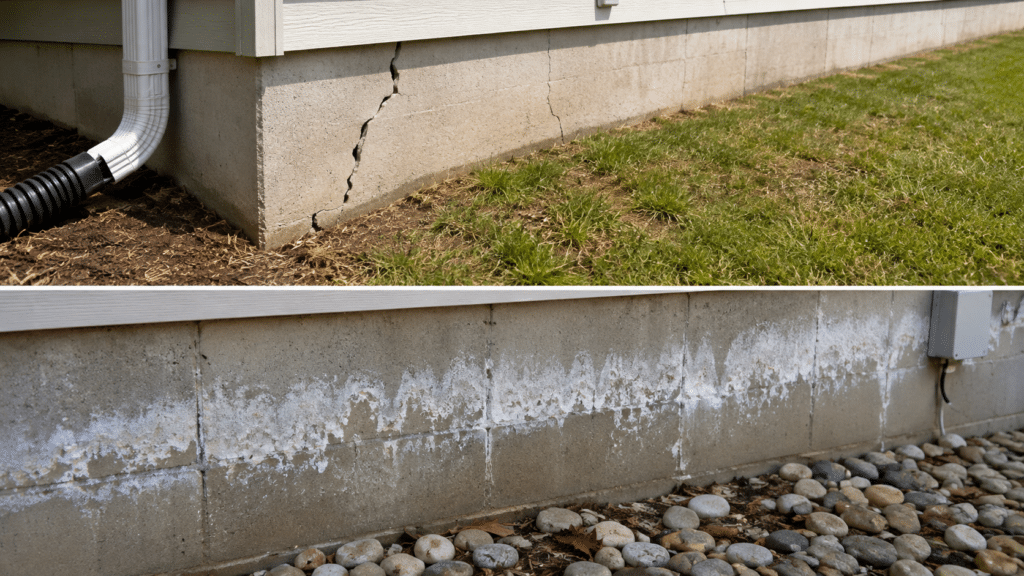
Efflorescence appears as a white, powdery residue on foundation walls or masonry, left behind after moisture evaporates. While efflorescence itself isn’t structurally damaging, it’s a useful indicator that water is moving through the masonry, which is worth investigating further, especially if it appears in new areas or larger amounts than in previous seasons.
Seasonal Considerations
Maryland’s late-summer weather pattern, with extended dry stretches interrupted by sudden heavy rain, creates conditions that can be harder on foundations than steadier weather throughout the rest of the year. According to the American Society of Home Inspectors, soil sloped toward a structure is a common contributor to moisture intrusion, and efflorescence at the foundation is frequently a sign of poor drainage at the exterior. This lines up with what inspectors often encounter locally, where grading and drainage issues tend to surface more clearly after a summer of uneven rainfall.
Gutters and downspouts play a direct role in keeping this kind of water away from a home’s foundation in the first place. Our recent post on roofing and gutters after summer storms covers how a properly functioning drainage system supports the rest of the home, which pairs well with a foundation and grading check this time of year.
When Further Evaluation Is Recommended
A few signs point to a need for a closer look from a structural engineer or foundation specialist:
- Cracks wider than a quarter inch, or cracks that appear to be actively widening
- Doors or windows that have become noticeably harder to open or close
- Visible separation between the foundation and an attached porch or stoop
- Efflorescence appearing in new or unusually large areas
- Standing water near the foundation that doesn’t drain within a day after rain
None of these signs necessarily mean a major structural repair is needed. In many cases, a specialist can assess the specific area and recommend a targeted fix.
Supporting Long-Term Maintenance and Prevention
A few consistent habits help protect a foundation through changing seasonal conditions. Checking grading periodically and adding soil where it has settled toward the home helps maintain proper drainage. Extending downspouts so they discharge several feet from the foundation reduces the amount of water reaching the soil closest to the home. Keeping an eye on foundation walls for new cracks or efflorescence, and noting any changes in door and window operation, makes it easier to catch a developing issue early. A periodic walk-around after significant weather swings is a simple way to stay ahead of foundation concerns before they grow.